Japan Gets the Facelifted Tundra This Winter, Safety Limits Included
The facelifted Toyota Tundra that debuted in the United States on Thursday will go on sale in Japan this winter, with some of its new driver-assistance features held back.
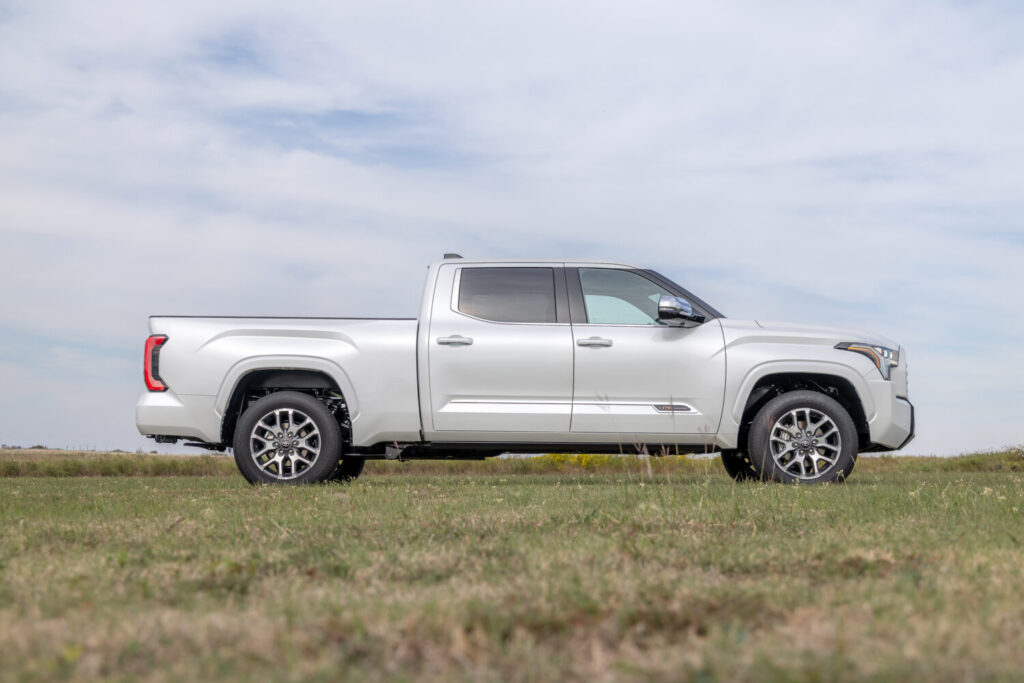
The facelifted Toyota Tundra that debuted in the United States on Thursday will go on sale in Japan this winter, with some of its new driver-assistance features held back.
The truck is the same Texas-built full-size pickup Toyota began importing into Japan this spring. It is sold there in a single 1794 Edition grade for 12 million yen including tax, with the 3.4-liter twin-turbo V6, a 10-speed automatic and four-wheel drive. Japan is getting the updated model within months of its American launch rather than waiting a model year. That suggests the import program Toyota started as a trade gesture is meant to stay current.
Toyota confirmed the timing in a one-paragraph notice on its Japanese newsroom on November 6, saying the partially updated Tundra announced in the US is scheduled for release at dealers nationwide this winter. A companion page on toyota.jp shows the redesigned front end on a prototype and lists the additions: the latest generation of Toyota Safety Sense, plus the newly added Proactive Driving Assist and a driver abnormality response system. The same page carries a footnote that the functions are limited because communication and road environments differ from North America, and it sends buyers to their dealer for grades, prices and the exact launch month.
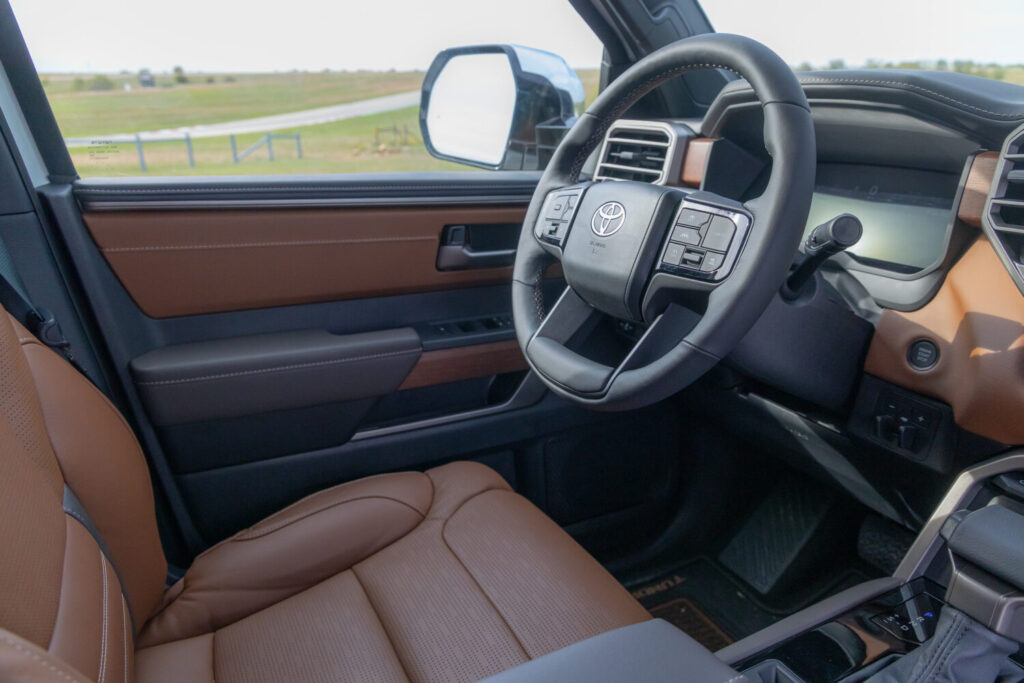
In the United States, Toyota’s November 5 release priced the 2027 Tundra from $42,890 and said it is expected at dealerships this fall. The front end was reworked by Toyota Motor North America’s design team with a wider stance and a new center lower bumper, and there is a new steering wheel inside. The adaptive dampers were retuned, the drive modes were cut to three, and a new combination of adaptive dampers and air suspension can be ordered on every grade. Toyota Safety Sense 4.0 is standard, which is where Proactive Driving Assist and the Emergency Drive Stop System come from. Every truck gets a 14-inch touchscreen and a 12.3-inch digital gauge cluster, and the i-FORCE MAX hybrid carries on with 437 horsepower, 583 lb-ft of torque and a 12,000-pound tow rating. We covered the full US changes when the 2027 Tundra went official.
The Japanese program dates to December 19, 2025, when Toyota said it was considering bringing three US-built models to Japan from 2026 in stages: the Camry from Kentucky, the Highlander from Indiana and the Tundra from its Texas plant. Toyota said at the time that the move would contribute to better Japan-US trade relations, and Car Watch reported that it relied on a new certification route the transport ministry was reviewing as part of Japan-US negotiations. That system, which lets a vehicle built in the US to American safety standards be sold in Japan without additional domestic testing, was created in February, and sales of the Tundra and Highlander began on April 2 at Toyota Mobility Tokyo, with nationwide sales to follow from the summer. The Highlander Limited ZR Hybrid was priced at 8.6 million yen, and Toyota said the Camry would come once preparations were complete.
At 5,930 mm long and 2,030 mm wide, roughly 233 by 80 inches, the Tundra is by far the largest vehicle Toyota sells in its home market. Toyota has not said whether the Japanese price will change with the update. Nor has it said whether the 1794 Edition will remain the only grade offered there.
The Toyota Report Take
Nobody expects the Tundra to sell in volume in a country built around kei cars and narrow streets, and at 12 million yen it was never going to. What matters is that Toyota is bothering to keep the Japanese version current, because a one-and-done import would have been the easy way to make the trade point and move on. For the San Antonio plant, every truck bound for Japan is extra output from the same line Toyota is already investing in, and a facelift that reaches Tokyo the same season it reaches Texas dealers is a small sign the US-built lineup in Japan is being run as a real product line rather than a photo opportunity. The footnote about limited safety functions is the honest part: Toyota’s driver-assistance systems lean on North American maps and connectivity, and it is better to say so up front than to let a Japanese buyer find out on the road.
Related
The 2027 Tundra Is Official, and the Leak Was Right
The 2027 Toyota Tundra will start at $42,890, the same figure that appeared on a dealer pricing sheet two weeks before Toyota made it official.

Toyota Trades Wheels for Snow Tracks on Five SEMA Concepts
Toyota brought a Tundra, a Tacoma, a 4Runner, a Land Cruiser and a Sequoia to the 2026 SEMA Show with their wheels replaced by snow tracks.
Comments (0)
Join the discussion