A Double Dose of Magnesium Is Behind the Tundra Camshaft Recall
Toyota has formally recalled 62,490 gas-engine Tundra pickups in the United States.
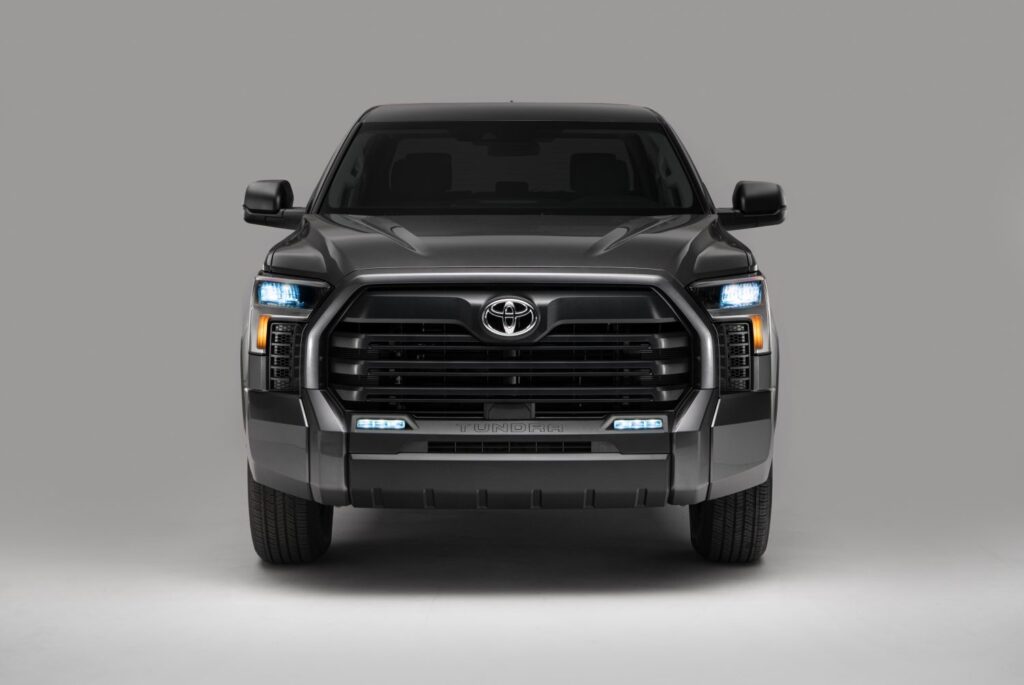
Toyota has formally recalled 62,490 gas-engine Tundra pickups in the United States. Its filing traces the cracked camshafts to one batch of 400 castings in which a worker added the alloy twice by mistake.
The trucks are 2025 and 2026 Tundras that left the factory with a suspect engine, 44,728 of them, plus 17,762 trucks from the 2022 and 2023 model years that later received one as a replacement engine. Toyota thinks only about 300 bad camshafts actually made it into vehicles, but dealers will have to check every truck on the list to find them.
The detail comes from Toyota’s Part 573 safety recall report, submitted to the National Highway Traffic Safety Administration on November 12 and now posted under campaign 26V750000. When this site first reported the plan a week ago, the figures came from a dealer notice and the campaign had not yet appeared in the federal database. The filing confirms the 62,490 count and fills in how the defect happened.
According to the report, the supplier is the CWC division of Kautex Textron in Muskegon, Michigan, and the part is the exhaust camshaft for the engine’s right-hand bank, part number 13502-F4010. On one production day, the casting line sat idle for an extended time because of equipment trouble. The line normally doses magnesium and the other alloy additives automatically, but for that one lot an operator added them again by hand, so the metal carried more magnesium than Toyota’s specification allows. Castings made that way can form tiny cracks when the engine plant machines them, and those cracks can keep growing once the engine is running until the camshaft breaks.
A broken camshaft can turn on the check-engine light and make the engine run rough, misfire or stall. Toyota warns that a stall at higher speeds takes away drive power and raises the risk of a crash. The first field report reached Toyota in October 2025 from an owner whose warning lamp was on and whose truck would not start. A second case followed in December, and lab analysis of both broken parts found magnesium above specification. To prove the cause, Toyota had the supplier deliberately cast a full lot with the additives doubled, ran it through its own heat treatment and machining, and found the same kind of surface cracks along with excess magnesium in every piece. Toyota decided on the recall on November 6, 2026. Its count of possibly related US cases stood at 91 as of October 30, made up of 31 technical reports from the field and 60 warranty claims.
Hybrid i-FORCE MAX Tundras are left out even though their V35A engines could also hold one of the affected camshafts. Toyota says a hybrid in that situation can keep moving for a limited distance on electric power, with a continuous chime, warning lamps and messages telling the driver something is wrong. A handful of loose V35A engines that might carry a bad camshaft are still unaccounted for, since Toyota has no record of them going into a truck, and the company says the part appears in no other Toyota or Lexus model sold here.
The repair starts with a dealer check of which batch the truck’s camshaft belongs to, and a new camshaft goes in at no cost when it turns out to be one of the bad ones. Toyota told NHTSA that dealers were to be notified by November 13 and that owner letters will go out between December 28, 2026 and January 11, 2027. The filing does not advise owners to stop driving or to park outside.
Owners should: run their VIN at nhtsa.gov/recalls or Toyota.com/recall and watch for a letter. Toyota’s recall codes are 26TA26 and 26TB26, and Toyota customer service is at 1-800-331-4331. NHTSA’s vehicle safety hotline is 1-888-327-4236.
Source: Toyota’s filing with NHTSA
The Toyota Report Take
This is about as contained as a 62,000-truck recall gets: one lot, one bank of the engine, roughly 300 parts in the field and a failure that announces itself with a warning light before anything breaks. What makes it worth reading is how ordinary the cause was. A line stopped, someone topped up the alloy by hand that had already been dosed, and a batch of camshafts went out with a flaw no one could see until engines started failing. The 91 field reports and warranty claims Toyota cites suggest owners have been living with this for a while, so anyone with a gas Tundra from these years who has had a check-engine light or a rough idle lately should get to a dealer before the letter arrives rather than after.
More on the Tundra
Related
Toyota’s Newest Takata Recall Is Mostly Old Corollas
Nearly three of every four vehicles in Toyota's latest Takata airbag recall are 2003-2008 Corollas.
Tacoma or Tundra: $35 More Buys the Full-Size Truck
The Toyota Tacoma and the Toyota Tundra overlap across $22,040 of their price ranges, and in the middle of that range they cost almost exactly the same.
The Tundra Trailhunter Undercuts a TRD Pro by $17,370
The 2027 Toyota Tundra Trailhunter has its first real price, and it lands at $60,225.
Comments (0)
Join the discussion