Corolla or Civic: $4,520 Buys 62 More Hybrid Horsepower
The cheapest 2027 Toyota Corolla Hybrid costs $4,520 less than the cheapest 2027 Honda Civic Hybrid, but the Civic's hybrid makes 62 more horsepower.
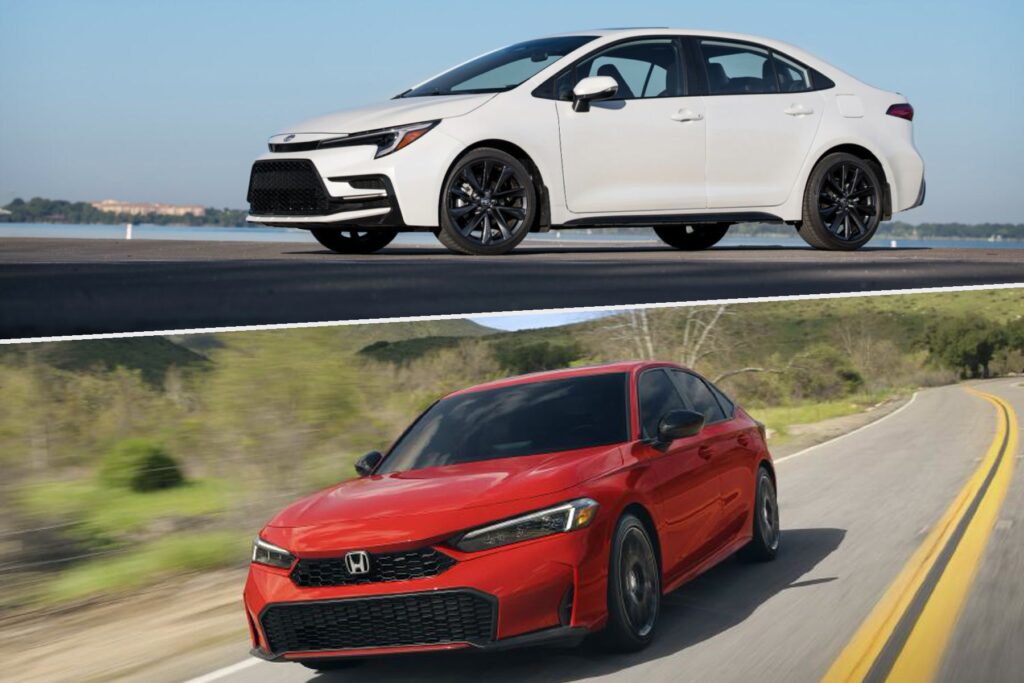
The cheapest 2027 Toyota Corolla Hybrid costs $4,520 less than the cheapest 2027 Honda Civic Hybrid, but the Civic’s hybrid makes 62 more horsepower. The Civic is also the roomier car, with 2.6 more inches of rear legroom and a bigger trunk, while only the Corolla can be ordered with all-wheel drive.
That makes the Corolla the natural choice for a buyer who wants 50 mpg for the least money or an all-wheel-drive hybrid for winter. The Civic suits the driver who wants a quicker hybrid or carries adults in the back seat, and who will pay a few thousand dollars more for it.
Price and Trims
Toyota’s full-line price sheet lists the 2027 Corolla sedan from $23,325 for the gas LE to $29,540 for the Hybrid XLE, and all-wheel drive adds $1,400 to the Hybrid LE. Honda’s 2027 Civic release prices the sedan at $24,995 for the LX, $26,995 for the Sport and $28,495 for the new Sport-L, with the Sport Hybrid at $29,695 and the Sport Touring Hybrid at $32,695. Every price here is before the delivery charge, which is $1,295 for both cars, so the gaps stay the same once it is added.
The Civic LX costs only $1,670 more than the Corolla LE, but the Corolla Hybrid LE undercuts the Civic Sport Hybrid by $4,520, and even the all-wheel-drive Hybrid LE is $3,120 cheaper. At the top, the Civic Sport Touring Hybrid costs $3,155 more than the Corolla Hybrid XLE. For leather and heated seats in a gas car, the Civic Sport-L costs $545 less than the Corolla XSE with its SofTex upholstery and heated 8-way power driver’s seat. Our Corolla deals for November 2026 show what Toyota is offering on top of these prices.
| 2027 Toyota Corolla | 2027 Honda Civic sedan | |
|---|---|---|
| Price range (MSRP, before fees) | $23,325 to $29,540 | $24,995 to $32,695 |
| Delivery fee | $1,295 | $1,295 |
| Powertrains | 2.0-liter gas, 169 hp; 1.8-liter hybrid, 138 hp | 2.0-liter gas, 150 hp; 2.0-liter hybrid, 200 hp |
| Drive | Front-wheel drive; all-wheel drive on Hybrid LE and SE | Front-wheel drive only |
| EPA city/hwy/combined | 31/41/35 mpg (LE); 53/46/50 mpg (Hybrid LE FWD, XLE) | 32/41/36 mpg (LX); 50/47/49 mpg (hybrids) |
| Seats | 5 | 5 |
| Trunk | 13.1 cu ft | 14.8 cu ft |
| Rear legroom | 34.8 in | 37.4 in |
| Length / wheelbase | 182.5 / 106.3 in | 184.8 / 107.7 in |
| IIHS award (2027) | None | None |
| NHTSA overall rating | 5 stars (gas FWD) | 5 stars (gas and hybrid) |
Powertrains and Fuel Cost
The gas versions favor the Toyota: according to Toyota’s 2027 Corolla release, the LE, SE and XSE use a 2.0-liter four-cylinder with 169 horsepower and 151 lb-ft of torque. That is 19 horsepower more than the 2.0-liter in the Civic LX, Sport and Sport-L, rated at 150 horsepower and 133 lb-ft in Honda’s Civic specifications, and both pair their engines with a continuously variable transmission.
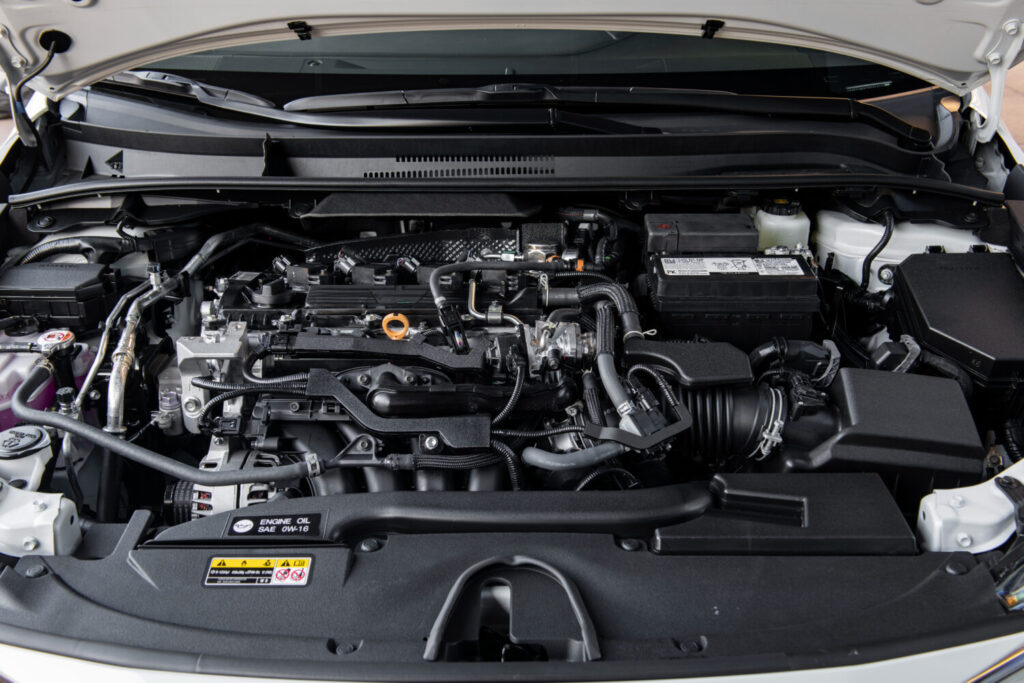
The hybrids turn that around, because the Corolla Hybrid pairs a 1.8-liter four-cylinder with Toyota’s fifth-generation hybrid system for 138 net horsepower, while the Civic’s two-motor hybrid makes 200 horsepower and its drive motor delivers 232 lb-ft of torque. The Corolla answers with available all-wheel drive on the Hybrid LE and Hybrid SE, while every Civic drives its front wheels only.
On fuel the two hybrids are almost level, as the EPA rates the front-drive Corolla Hybrid LE at 53 mpg city, 46 highway and 50 combined, and the Civic hybrid at 50, 47 and 49, and it puts both at $1,200 a year in fuel. Among the gas cars the Civic LX edges ahead at 36 mpg combined against 35 for the Corolla LE, a difference the EPA values at $50 a year, and the all-wheel-drive Corolla Hybrid LE still returns 48 mpg combined.
Space, Cabin and Safety
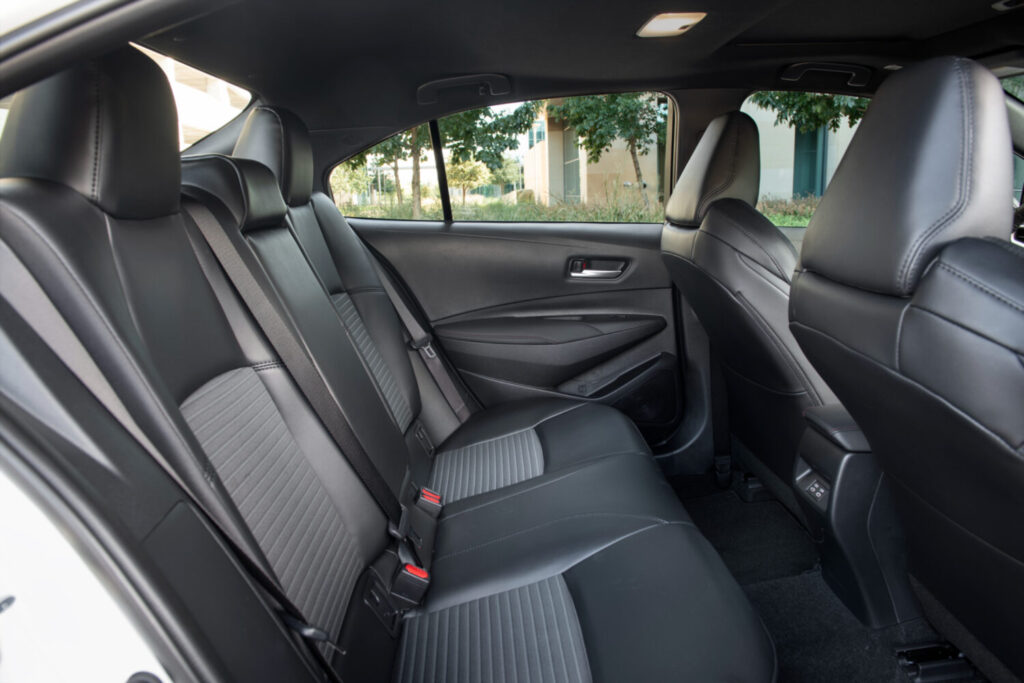
The Civic is the larger car, 2.3 inches longer than the Corolla on a wheelbase 1.4 inches longer, and Honda gives it 37.4 inches of rear legroom and a 14.8-cubic-foot trunk, against 34.8 inches and 13.1 cubic feet in Toyota’s Corolla specifications. The EPA classes the Civic sedan as a midsize car and the Corolla as a compact.
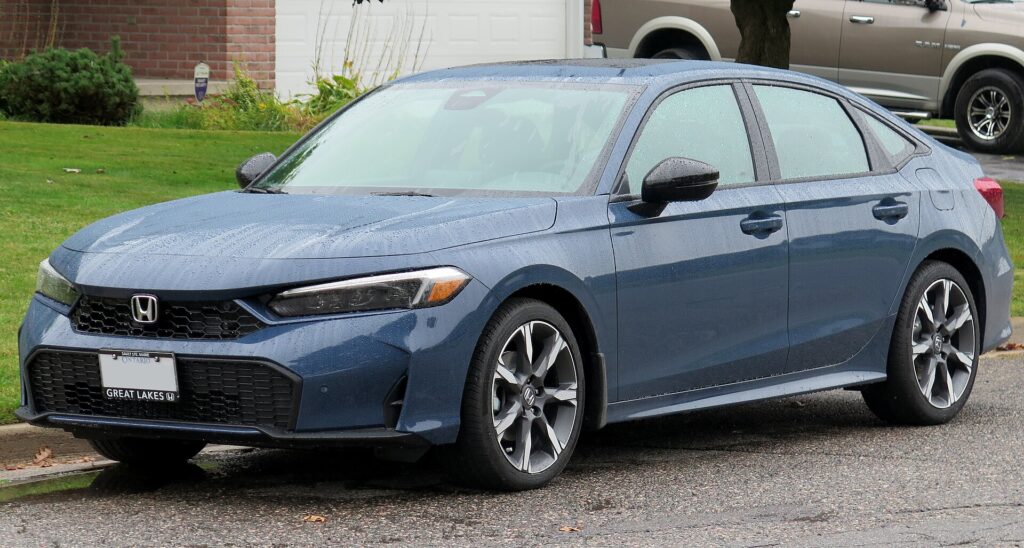
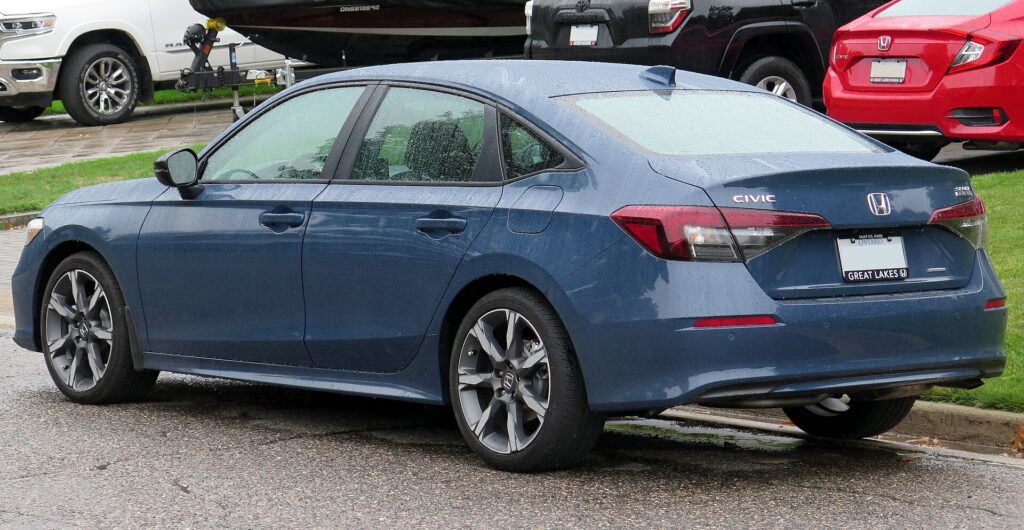
From behind, the Civic sedan’s long rear deck shows where the bigger trunk comes from, and every Civic from the Sport up splits its rear seatback 60/40 for longer loads.
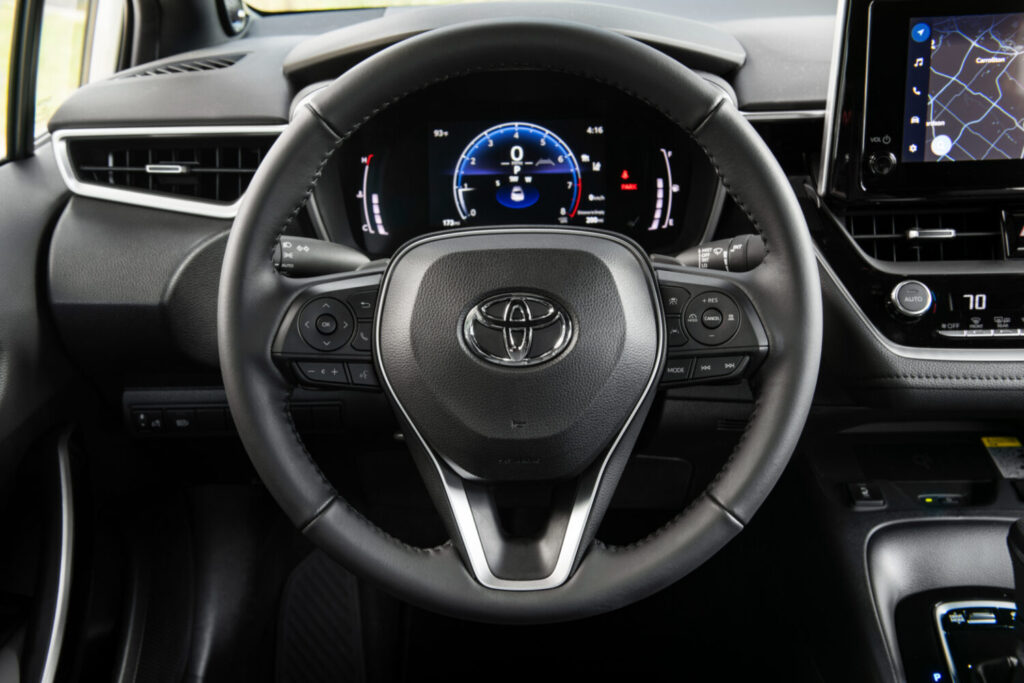
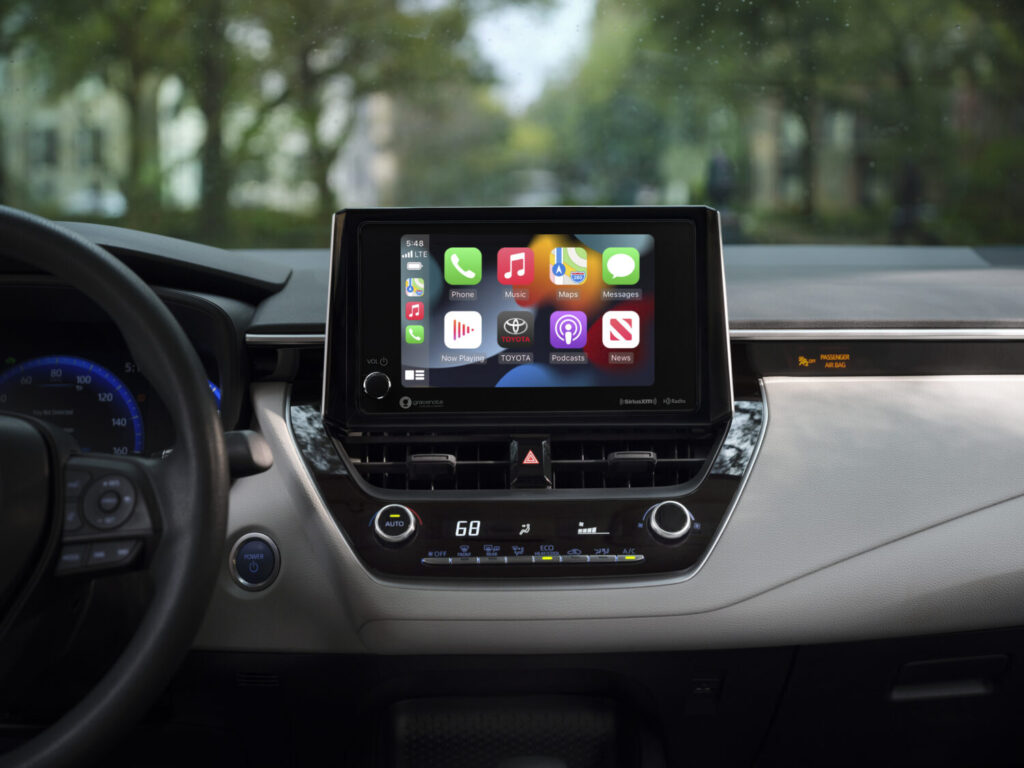
The Corolla gives more technology for the money. Every grade has an 8-inch touchscreen, a 7-inch digital gauge cluster, wireless Apple CarPlay and Android Auto and a blind-spot monitor, and the XSE and Hybrid XLE step up to a 10.5-inch screen and a 12.3-inch cluster. The Civic uses a 7-inch touchscreen on every trim but the Sport Touring Hybrid, which alone gets a 9-inch screen, a 10.2-inch instrument cluster and wireless phone connections, and the LX goes without blind-spot monitoring.
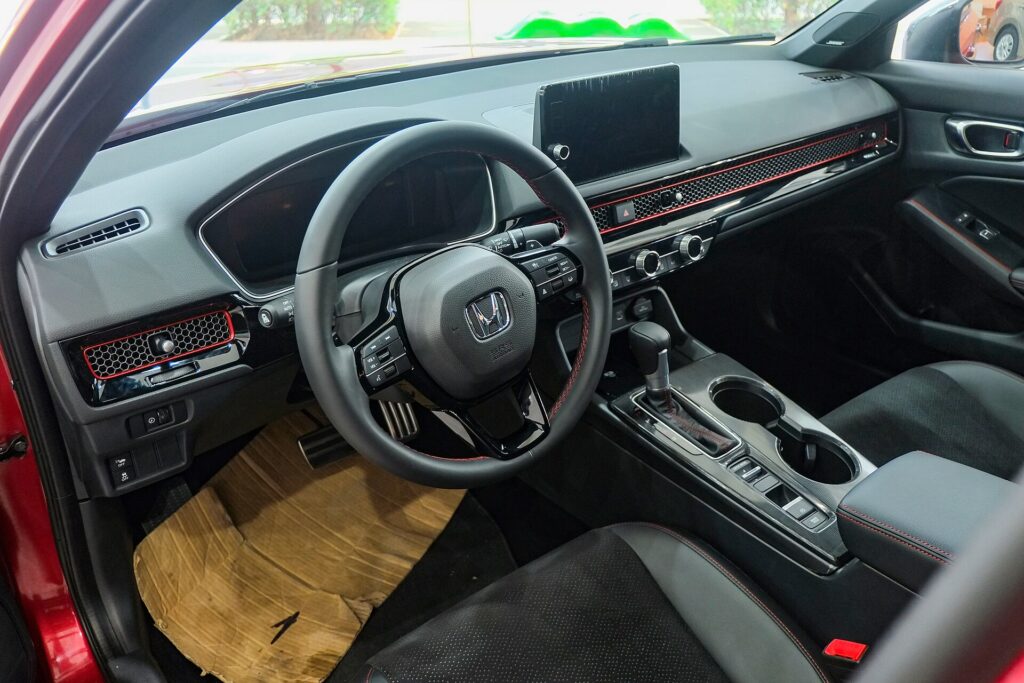
The Civic’s dashboard runs a honeycomb mesh strip across its full width, with the touchscreen standing on top of the dash.
Both sedans earn five stars overall from the National Highway Traffic Safety Administration, though only the gas, front-drive Corolla has been rated, and the Civic scores four stars in the frontal test. Neither holds a 2027 award from the Insurance Institute for Highway Safety. The institute rates the Corolla Marginal in its updated moderate overlap crash test, where the Civic is Acceptable, while the Corolla’s automatic emergency braking rates Good for vehicles and pedestrians against Acceptable for the Civic. Toyota covers the Corolla Hybrid’s battery for 10 years or 150,000 miles. Toyota showed a Corolla Concept in Japan in October 2025 as a look at where the car is heading, but it has not said when a new Corolla will reach US dealers. Our comparison of the Corolla and the Camry covers the step up to Toyota’s bigger sedan.
The Toyota Report Take
Buy the Corolla if you want a hybrid at the lowest price either brand charges, if all-wheel drive matters where you live, or if you want wireless phone connections and blind-spot monitoring without climbing to the top trim. Its hybrid matches the Civic’s EPA fuel-cost estimate while costing thousands less, and the gas Corolla is both cheaper and stronger than the gas Civic.
Buy the Civic if you carry adults in the back, want the bigger trunk, or care about how the car drives. Its 200-horsepower hybrid is the more satisfying powertrain by a wide margin, and the Sport-L brings leather and heated seats for less than a Corolla XSE. The Civic asks more money for those strengths, but it delivers them, which makes this one of the closest calls in the segment.
Related
Toyota’s Newest Takata Recall Is Mostly Old Corollas
Nearly three of every four vehicles in Toyota's latest Takata airbag recall are 2003-2008 Corollas.
Toyota’s Next Pickup Is a Corolla Cross With a Bed
Toyota has confirmed that its long-rumored Corolla Cross pickup is real, and that it will be called the Corolla Deck.
Corolla or Camry: The Priciest Corolla Sits Just $160 Below a Camry
The Toyota Corolla and the Toyota Camry overlap more than their sizes suggest, with the most expensive Corolla just $160 below the cheapest Camry.
Comments (0)
Join the discussion