The Electric-Only Highlander Is Running Late
The next Toyota Highlander is a three-row electric SUV with no gas or hybrid version, and after two delays it now won't start production until early 2027, when it will arrive as a 2028 model.
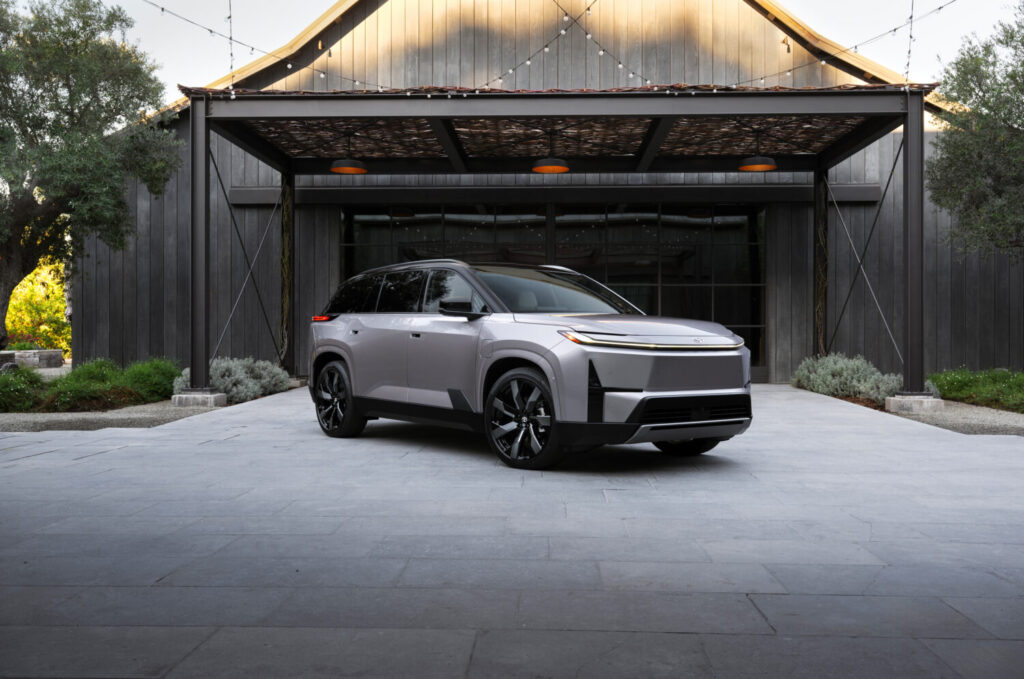
The next Toyota Highlander is a three-row electric SUV with no gas or hybrid version, and after two delays it now won’t start production until early 2027, when it will arrive as a 2028 model.
The fifth-generation Highlander was revealed on February 10 as Toyota’s first three-row electric vehicle for the US and the first EV it will build in America. It was originally due on sale late this year as a 2027 model, so Toyota has kept building the current gas and hybrid Highlander to bridge the gap, and the outgoing model could remain on dealer lots into 2027.
According to Toyota’s release, the new Highlander comes in XLE and Limited grades with front- or all-wheel drive and two battery sizes, 77.0 kWh and 95.8 kWh. The front-drive XLE has a single 221-horsepower motor, while the dual-motor all-wheel-drive models make 338 horsepower combined. A North American Charging Standard port is standard, and Toyota says a DC fast charge from 10 to 80 percent takes about 30 minutes in ideal conditions, with battery preconditioning and Plug & Charge also standard.
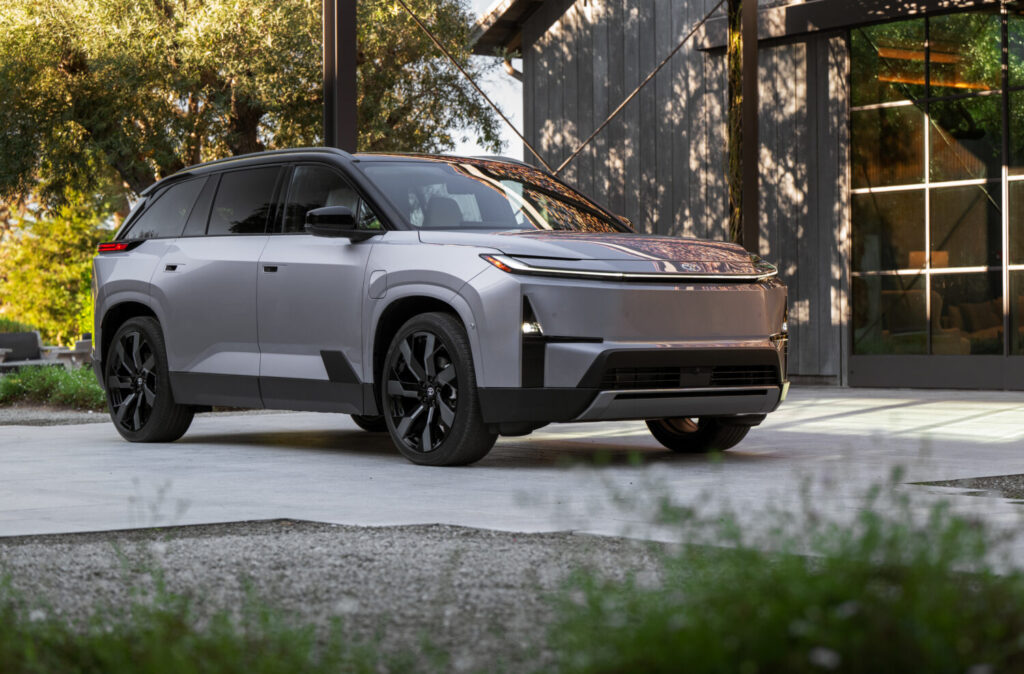
US range estimates published at the reveal by Motor1 are 287 miles for the front-drive XLE and 270 miles for the all-wheel-drive XLE with the smaller battery, while the 95.8-kWh pack raises the estimate to as much as 320 miles. The bigger battery doesn’t add power.
| Version | Battery | Power | Estimated range |
|---|---|---|---|
| XLE FWD | 77.0 kWh | 221 hp | 287 miles |
| XLE AWD | 77.0 kWh | 338 hp | 270 miles |
| XLE AWD / Limited AWD | 95.8 kWh | 338 hp | up to 320 miles |
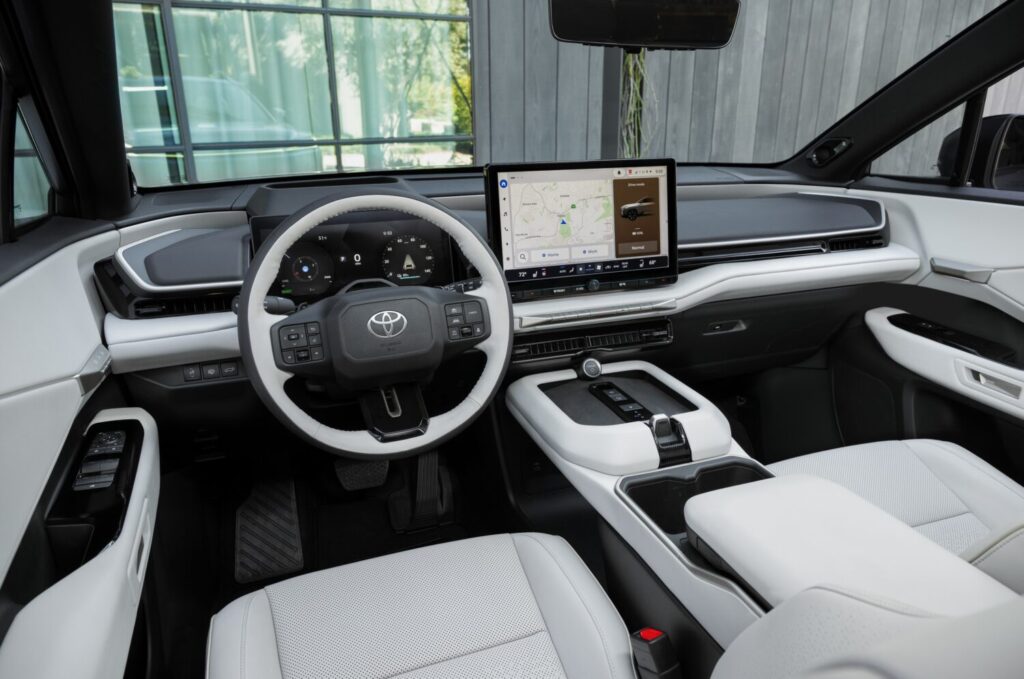
The EV rides on a modified version of the TNGA-K platform and measures 198.8 inches long on a 120.1-inch wheelbase, InsideEVs reported. Six seats with second-row captain’s chairs are standard, and a second-row bench on the all-wheel-drive XLE makes it a seven-seater. Cargo space is 15.9 cubic feet behind the third row and 45.6 cubic feet with the third row folded. Inside, there’s a 14-inch touchscreen, a 12.3-inch digital gauge cluster, a standard dashcam-style Drive Recorder, Toyota Safety Sense 4.0 and vehicle-to-load power through an accessory adapter, while the Limited adds a head-up display and ventilated front seats.
Toyota will build the Highlander in Georgetown, Kentucky, with batteries from its new plant in Liberty, North Carolina. The timeline has slipped twice. In July, a Toyota spokesperson told InsideEVs that "additional adjustments are being made to the vehicle prior to launch" and that on-sale timing would come once production was confirmed. In September, autoevolution reported that production had moved to the first quarter of 2027 and that the SUV would launch as a 2028 model, which is how Toyota’s own releases now describe it. Toyota Canada lists the on-sale date as early 2027. Toyota hasn’t given a reason for either delay, and it hasn’t announced pricing.
The gas Highlander isn’t going out on a high. Its sales fell from 222,805 in 2022 to 56,208 last year, according to autoevolution, as buyers moved to the larger Grand Highlander, which stays on sale with gas and hybrid power.
The Toyota Report Take
Toyota is betting one of its best-known nameplates on an electric three-row SUV just as federal EV incentives have gone away, and the delays suggest it knows the stakes. The specs are competitive, the Kentucky build and NACS port are the right calls, and the 30-minute fast charge is respectable. Price will decide whether it works, because if the Highlander lands close to the gas model’s mid-$40,000 range, it could pull families into an EV who never would have shopped one, but if it lands with the Kia EV9 and Hyundai Ioniq 9, it will be a nice SUV that the Grand Highlander outsells in the same showroom.
Related
2021-2025 Toyota Highlander Recalled Over Seat Back Issue
The second-row seat backs may fail to lock into position during seat back adjustment.
2024-2025 Toyota Highlander Recalled Over Seat Belt Issue
The third row center seat belt roof anchor may have been installed at an incorrect angle, preventing the seat belt from properly restraining the occupant.
2022-2026 Lexus and Toyota Models Recalled Over Rearview Camera Issue
A software error may cause the rearview camera to freeze or display a blank screen when the vehicle is in reverse.
Comments (0)
Join the discussion