The 2027 Sienna Gets Quicker, Thriftier and One Trim Shorter
The 2027 Toyota Sienna moves to the sixth generation of Toyota's hybrid system, and the change lifts its city fuel economy rating to 39 mpg while cutting its 0-60 mph time to 7.5 seconds.
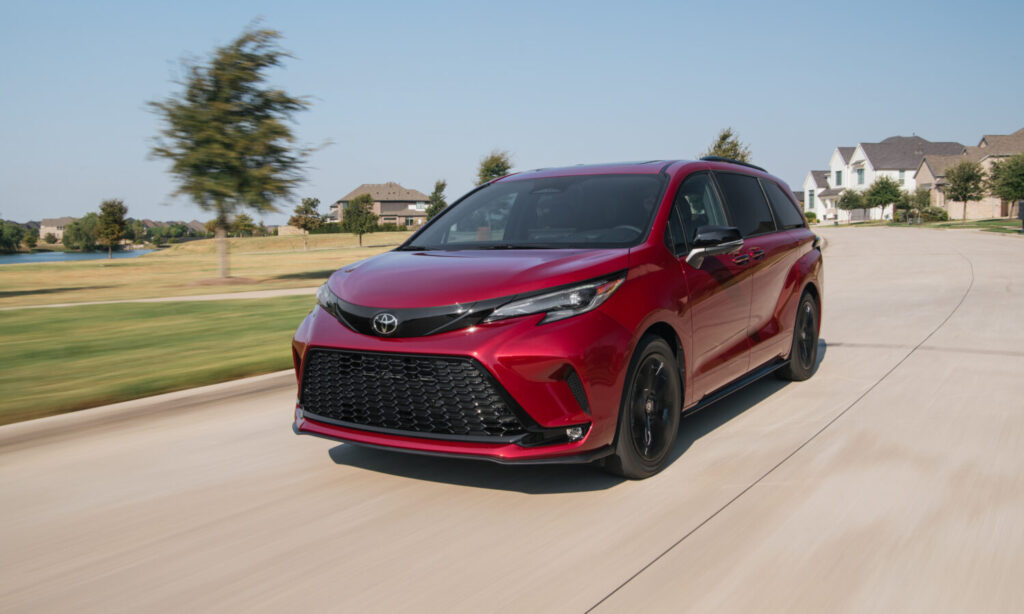
The 2027 Toyota Sienna moves to the sixth generation of Toyota’s hybrid system, and the change lifts its city fuel economy rating to 39 mpg while cutting its 0-60 mph time to 7.5 seconds.
Toyota also used the update to give every Sienna a 12.3-inch touchscreen, a 12.3-inch digital instrument cluster, Toyota Safety Sense 4.0 and a built-in dash cam, and to fold the Limited grade out of the lineup. The van is still built in Princeton, Indiana, and should reach dealers early in 2027, with prices to follow later.
A Bigger Hybrid for a Heavy Van
According to Toyota’s release, this version of the hybrid was designed with heavier vehicles in mind. The battery is now a lithium-ion pack of 1.15 kWh, the front motor is rated at 124 kW, and AWD vans add a 40-kW motor driving the back wheels, all working with the familiar 2.5-liter four-cylinder. Moving the inverter into the transaxle housing makes the package smaller and lighter and puts its weight lower in the van. Toyota also switched to silicon carbide in the motors and to low-viscosity fluids, including 0W-8 oil, to trim internal losses.
The gas engine still makes 176 lb-ft, but the system as a whole now produces 251 hp, six more than last year. That is enough to bring the front-drive Sienna’s estimated 0-60 mph run down to 7.5 seconds, with the AWD van a tenth behind, where the 2026 model needed 7.9. Toyota says the engine now holds lower revs both at parking-lot speeds and in highway merges, which should make it quieter where the outgoing van was noisiest.
The fuel economy gain is the bigger number for families. Toyota estimates 39 mpg city, 35 highway and 37 combined with either drivetrain, a three mpg improvement in city driving for front-drive vans and four mpg for AWD.
New Steering, Brakes and Safety Hardware
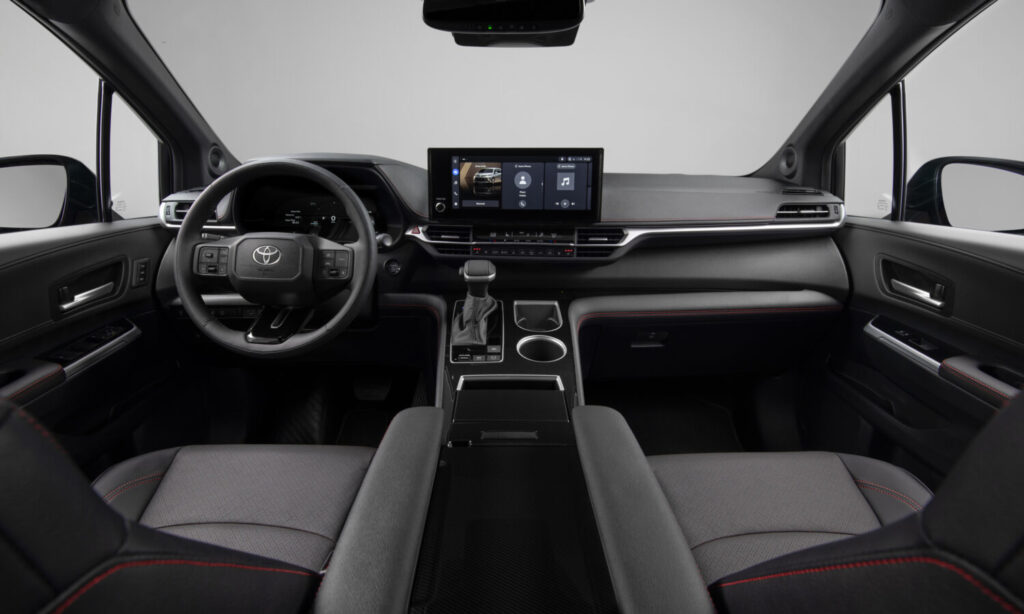
The steering column, gearbox, motor control unit and torque sensor are all new, and the system has been retuned to need less effort at parking speeds and to feel more settled on center at highway speeds. The Sienna also picks up the electronically controlled brake system that arrived on the 2026 RAV4, along with Vehicle Braking Posture Control, which brakes individual wheels to slow body roll as the van turns into a corner. Toyota quotes a 1.6-decibel drop in noise reaching the cabin, thanks to heavier insulation behind the dashboard.
A new electrical platform makes room for Toyota Safety Sense 4.0, which Toyota has so far fitted to the 2026 RAV4 and the 2027 Tundra and Sequoia. Standard features include Proactive Driving Assist, Safe Exit Assist, an Emergency Driving Stop System and trailer sway control, and Toyota says lane tracing and adaptive cruise control both work better than before.
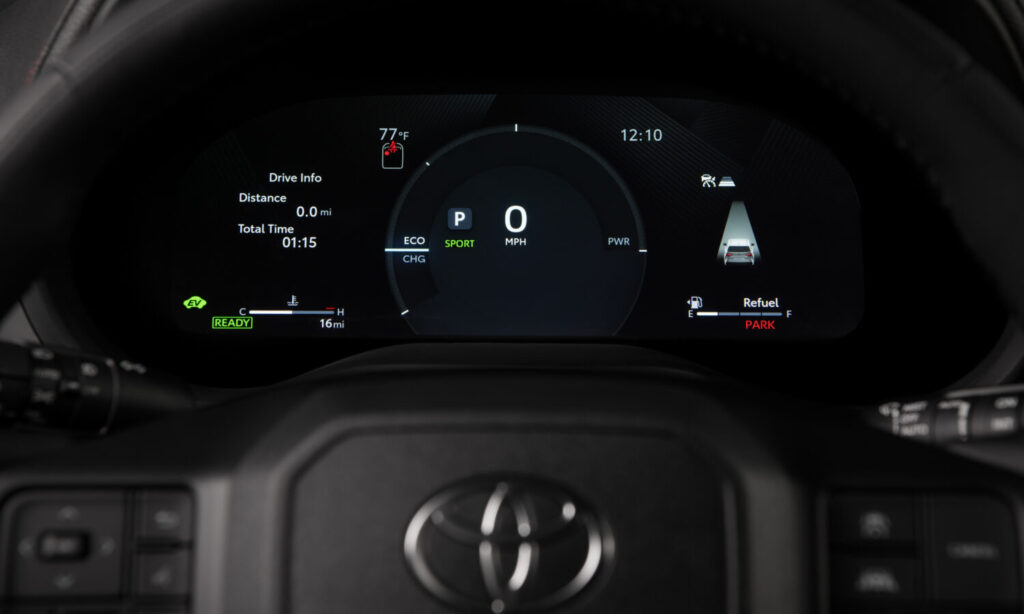
The base LE gains the most inside. Its 8-inch touchscreen gives way to the 12.3-inch unit, its 7-inch driver display becomes the 12.3-inch cluster, and it adds a hands-free kick sensor for the liftgate on vans without a tow hitch. From the XLE up, the front passenger now gets eight-way power adjustment too. Families who order the ceiling screen for the second row, offered on the Woodland, XSE and Platinum, get a 12.9-inch touch display in place of the old 11.6-inch one.
The Limited is gone. Toyota moved enough equipment into the sporty XSE to cover for it: a head-up display, memory for the driver’s seat, cooled seats for both front occupants and the 360-degree camera system are all standard there now, alongside the JBL stereo. That leaves five grades for 2027 (LE, XLE, Woodland, XSE and Platinum), and the Woodland also gains the 360-degree cameras as standard. Cypress paint has been dropped in favor of a new color called Storm Cloud.
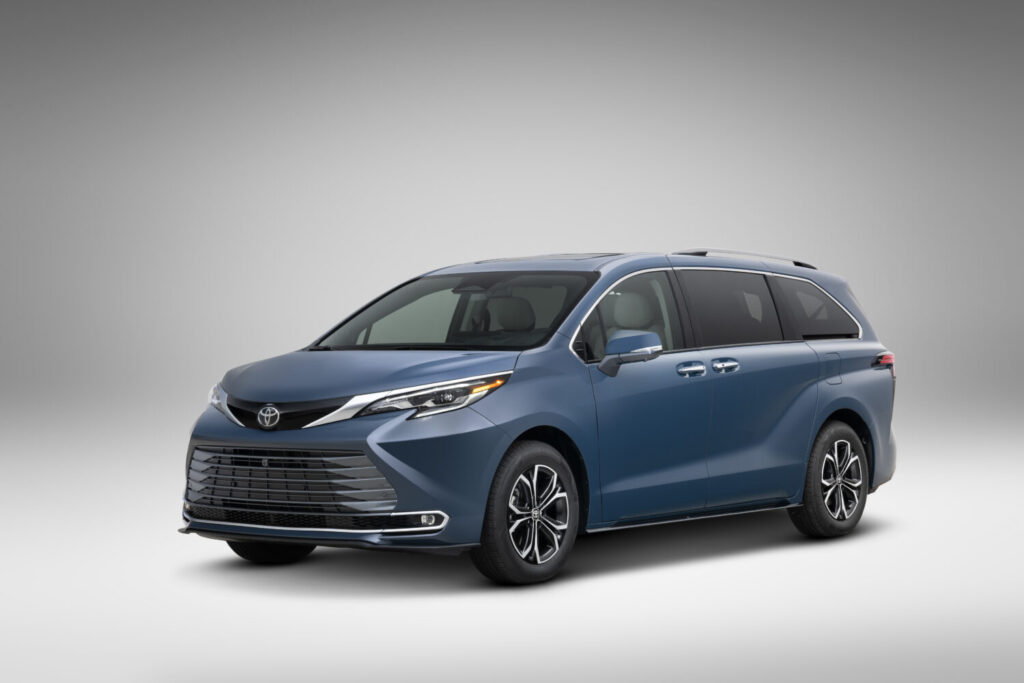
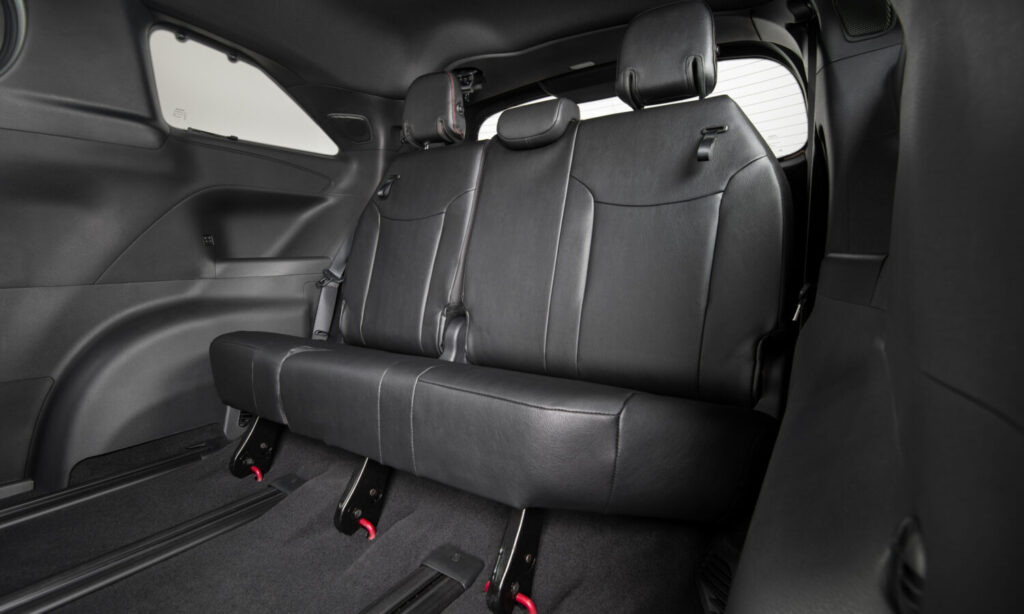
The cabin dimensions are unchanged, with 39.9 inches of second-row legroom, 38.7 inches in the third row and 101.0 cubic feet of cargo space behind the front seats. Seven-seat vans with the long-slide captain’s chairs can still move them through 25 inches of travel, with ottomans standard on the two top grades.
The Toyota Report Take
This is the update Sienna owners have been asking for since 2021. The old van was frugal but loud when pushed, and a 7.9-second minivan with a buzzing four-cylinder never felt as calm as its rivals. Quicker acceleration, a quieter engine and a better city rating all at once are rare in a mid-cycle refresh, and the big screens finally make the LE feel like a $40,000 vehicle.
Dropping the Limited makes sense when the XSE now has nearly everything it offered, but the price list will decide whether that is a gift or a quiet price increase. If Toyota holds the XSE close to where it sits today, the 2027 Sienna becomes the easiest minivan recommendation on the market.
Related
Grand Highlander or Sienna: The Minivan Starts Cheaper and Carries More
The Toyota Grand Highlander and the Toyota Sienna both carry up to eight people, but the minivan is the one with more room, and it starts for less.
Toyota Sienna Deals for November 2026: Leases From $389 a Month
Toyota is offering the 2026 Sienna LE on a lease from $389 a month this month.
Sienna Nears 100,000 Sales With Two Months to Go
The Toyota Sienna sold 10,934 minivans in October, a 29.1% gain over the same month last year, and the hybrid-only van now stands at 95,704 sales for 2026…
Comments (0)
Join the discussion