Toyota’s Self-Driving Lexus Sees the Road With Seven Cameras
Toyota's next driver-assistance system, L2++, drives itself with seven cameras in an ordinary-looking Lexus hybrid.
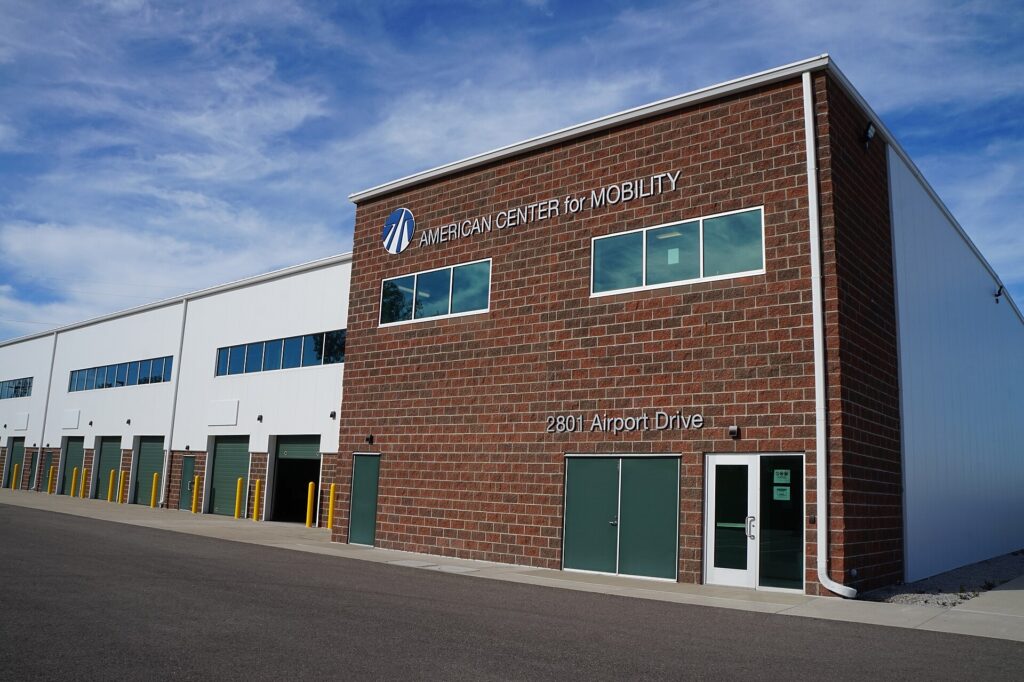
Toyota’s next driver-assistance system, L2++, drives itself with seven cameras in an ordinary-looking Lexus hybrid. The engineer in charge says it has climbed seven of the ten stations up Mount Fuji, with a 2028 launch as the summit.
Toyota gave rides in its test car on the proving ground of the American Center for Mobility in Ypsilanti, Michigan, near Detroit, a site of about 500 acres. The car steered itself through roundabouts, braked more naturally than it had at an earlier demonstration in Europe and stopped hard when a fast-moving scooter came up from the blind spot behind it.
The ride was described by Car Watch, whose editor rode in the back seat. Asked how far along the system is, Akihiro Sarada, head of Toyota’s Digital Software Development Center, used the Japanese way of measuring a climb up Mount Fuji, which has ten stations to the top. "Today’s is maybe around the 7th station," he said, adding that the basic performance work is done and what remains is refining how the car behaves.
The seven cameras do the basic driving. Two face forward, a wide-angle camera and a telephoto camera that can see more than 300 meters ahead, and four more around the car give a surround view, with one more facing backward. The test car also carries lidar, a front radar and sonar sensors, but Car Watch reports that the radar and sonar do the same jobs they do in current driver aids and act as guardrails for the artificial intelligence that does the driving, which Toyota describes as end-to-end, meaning one system goes from what the cameras see to what the car does.
Toyota chose a hybrid on purpose, to show that a car does not have to be fully electric to drive itself. Because Toyota’s hybrid system splits power through a planetary gearset, the automated driving computer only has to ask for an amount of torque, and the hybrid works out how much comes from the engine and how much from the motors. The camera feeds run through a single chip that has to be air-cooled to keep the cost down, which fits Toyota’s plan to put the system in affordable models.
The tuning was different from what the same car did a month earlier at Toyota Motor Europe’s technical center, in a much smaller lot. In Michigan it accelerated harder, which Car Watch was told reflects North American reviewers’ taste for sharp acceleration, and its steering was smoother at higher speeds. Toyota says it has built in driving habits taken from its most skilled test drivers, whom it calls takumi.
Sarada would not say whether the driving model comes from the Large Behavior Model work at Toyota Research Institute, answering only that "there are many kinds of AI." Toyota is aiming to launch the system in 2028 on affordable models, and Car Watch expects it to arrive with the next generation of Toyota’s Arene electronics as models are redesigned. Because L2++ still leaves the driver responsible, Car Watch notes it should not need any change in the law to go on sale.
The Toyota Report Take
Seven cameras, one air-cooled chip and a hybrid is a strikingly cheap recipe next to the lidar-heavy robotaxis that get most of the attention, and that is the point. Toyota is not trying to build a car with no driver; it is trying to make a very good hands-on helper cheap enough to fit in a Corolla-priced car. Tuning the acceleration for American testers also tells you which market Toyota is thinking about. If the last three stations go as smoothly as the first seven, this is the system most Americans will meet first.
Related
The RAV4 Earns Five Stars in Japan, With One Weak Spot
The new Toyota RAV4 has earned five stars and a Five-Star Award in Japan's government crash and crash-avoidance assessment, the first year the program has scored cars against…
The RAV4 Plug-In’s Power Glitch Has Spread to Its Suzuki Twin
Suzuki is recalling 1,218 Across crossovers in Europe, its rebadged Toyota RAV4 Plug-In Hybrid, for the software fault that sent almost 31,000 RAV4 plug-ins back to American dealers…
Akio Toyoda Takes a Job Where He’ll Have a Boss Again
Toyota Chairman Akio Toyoda will report to one of his own executives when he becomes chief officer of the new Toyota Philosophy and Education Group on January 1,…
Comments (0)
Join the discussion