Toyota’s Go-Kart Frames Are Welded by a Robot That Grades Its Own Work
Toyota said on October 28 that its GR Kart gets its steel frame from an AI-equipped robot that reads each joint, makes the weld and then inspects the result on its own.
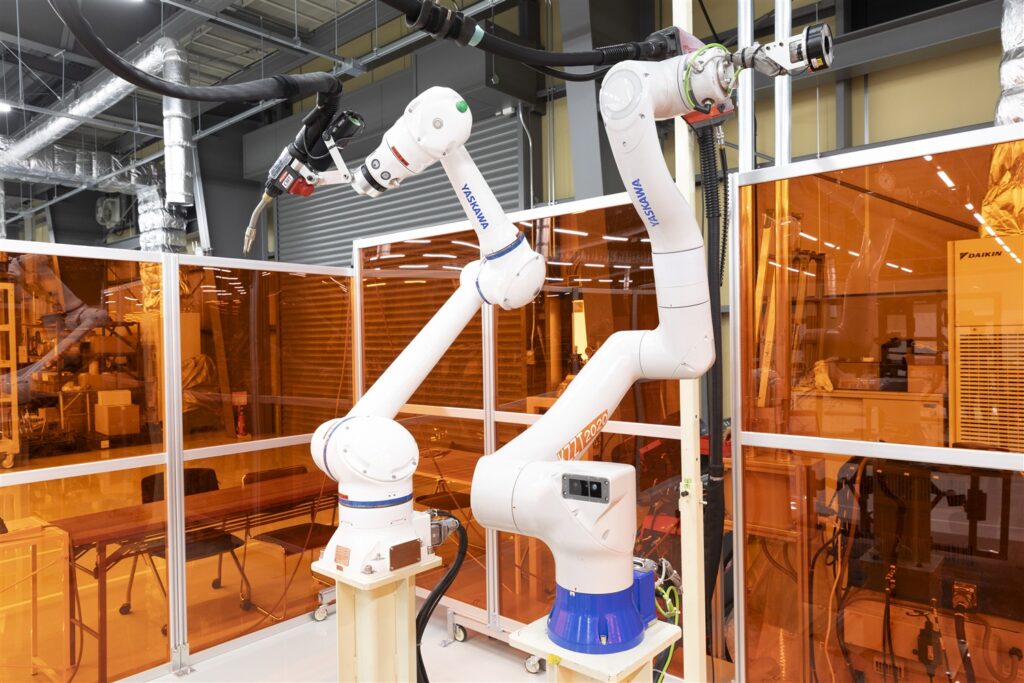
Toyota said on October 28 that its GR Kart gets its steel frame from an AI-equipped robot that reads each joint, makes the weld and then inspects the result on its own.
The system went to work in September at the Gamagori GR Kart Workshop in Aichi Prefecture, Japan. Yaskawa Electric’s Motoman Next robot checks conditions such as the gaps between frame pipes and their temperature, decides how to weld them, and afterward confirms the quality and corrects anything that falls short. Toyota says the setup has already lowered what it costs to build the kart.
GAZOO Racing and Yaskawa announced the work on October 28, and the story they tell starts a long way from a kart track. In 2023, Toyota chairman Akio Toyoda visited the Toyota Gazoo Racing World Rally Team in Finland and learned that building a single roll cage took two to three weeks. GR and Yaskawa then developed a new arc welding process called Sequence Freezing Arc Welding, or SFA, which arrived in 2024 and cut that job to three days. The companies say it also improved weld quality and strength while saving weight, and it has since moved onto race cars in Japan’s Super Taikyu Series.
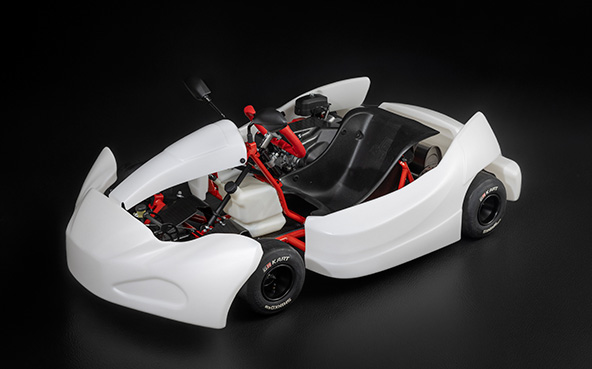
The kart robot builds on what the two companies learned from SFA. Conventional industrial robots generally repeat a programmed motion under tightly controlled conditions, as the Daily Tribune noted in its report on the system, while this one is expected to cope when one frame differs from the next. Yaskawa has sold the Motoman Next line since 2023 as a new generation of industrial robot with autonomous abilities.
Toyota frames the project as an extension of jidoka, its long-standing principle that a machine should detect a problem and stop bad work from moving down the line. The release calls this next step an attempt to have the robot handle recognition, judgment and correction, and it says the companies will keep refining the system in real production. GR also says it wants to widen its motorsports-led development from the cars themselves to the techniques used to build them.
The GR Kart itself went on sale in Japan on September 10 at 385,000 yen, including tax. The entry-level racing kart has a 215 cc engine, weighs 83 kilograms and fits inside a Toyota Noah minivan without being taken apart. It is sold through 36 kart tracks and seven GR Garage locations in Japan, and Toyota’s launch release listed no sales locations outside the country.
The Toyota Report Take
A go-kart is an odd place to find some of Toyota’s most interesting manufacturing news, but it may be exactly the right place. The Gamagori workshop is small, the stakes are low and a mistake costs a length of steel tube rather than a line stoppage at a full-scale vehicle plant. That is where we would test this too.
The bigger takeaway is the path the idea traveled, from a chairman learning that a roll cage takes weeks to a robot welding a kart for families. Toyota says racing improves its road cars, a claim every automaker makes, and this is a rare case where the trail can actually be followed. The next stop worth watching is whether this welding shows up on anything Americans can buy.
Related
Toyota’s Rally Team Is Building a Home Five Times Bigger
On November 2, Toyota's World Rally Championship team broke ground on a technical center in Finland that will be five times the size of its current base.

Toyota Led 222 of 267 Laps at Homestead and Lost on the Last One
Toyota's Camrys led 222 of the 267 laps in Sunday's NASCAR Cup Series finale at Homestead-Miami Speedway and still left Florida without the race win or the championship.
Toyota’s New World Champions Finished a Lap Down
Sebastien Buemi, Brendon Hartley and Ryo Hirakawa are the 2026 World Endurance Championship drivers' champions after finishing the 6 Hours of Monza 11th, a lap behind the winning…
Comments (0)
Join the discussion