Camry or Accord: Toyota’s Hybrid Starts $4,095 Lower
Every 2027 Toyota Camry is a hybrid, while the cheapest 2026 Honda Accord Hybrid costs $4,095 more than the cheapest Camry.
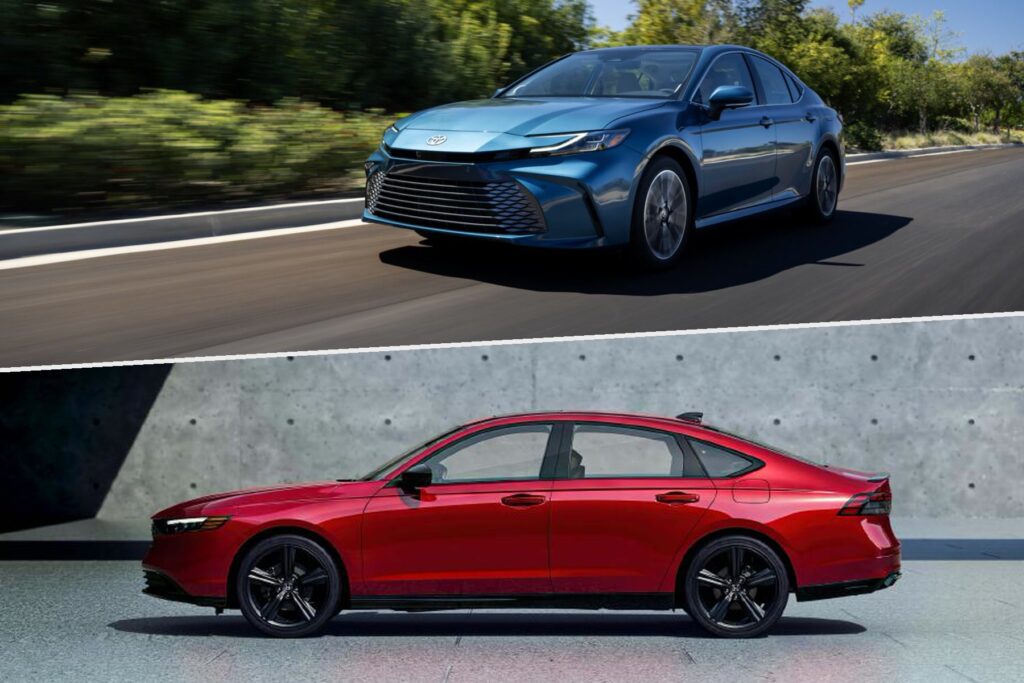
Every 2027 Toyota Camry is a hybrid, while the cheapest 2026 Honda Accord Hybrid costs $4,095 more than the cheapest Camry. The two sedans are almost exactly the same size, and the Camry also offers all-wheel drive on every grade, which the front-drive-only Accord does not offer at all.
That makes the Camry the obvious choice for a buyer who wants the best fuel economy for the least money, or who lives where winter makes all-wheel drive worth having. The Accord answers with the roomier cabin, the bigger trunk and the lowest price of entry, thanks to a turbocharged gas version that undercuts every Camry, so it suits the shopper who carries adults in the back seat or who would rather save at the dealership than at the pump.
Price and Trims
Toyota’s full-line price sheet lists the 2027 Camry from $29,700 for the front-drive LE to $37,625 for the XSE with all-wheel drive, across five grades: LE, SE, Nightshade, XLE and XSE. All-wheel drive adds $1,525 on the LE. Honda’s 2026 Accord release prices the gas LX at $28,395 and the SE at $30,695, with the hybrid starting at $33,795 for the Sport and topping out at $39,495 for the Touring. Every price here is before the delivery charge, which is $1,295 for the Camry and $1,195 for the Accord.
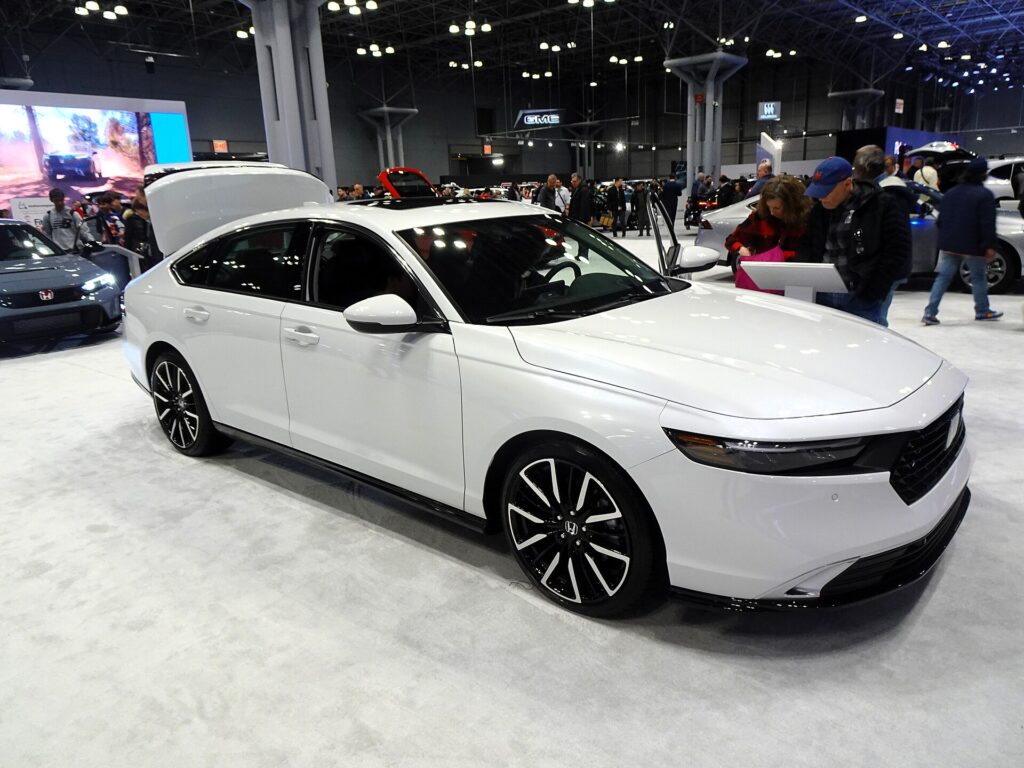
The cheapest hybrid of each brand therefore comes to $30,995 for the Camry LE and $34,990 for the Accord Sport once the fees are added. The two lineups meet in the middle, where the Camry XLE at $34,900 sits just $195 below the Accord EX-L Hybrid, and at the top the Touring costs $3,395 more than a front-drive Camry XSE and $1,870 more than an all-wheel-drive one. Our Camry deals for November 2026 show what Toyota is offering on top of those prices.
| 2027 Toyota Camry | 2026 Honda Accord | |
|---|---|---|
| Price range (MSRP, before fees) | $29,700 to $37,625 | $28,395 to $39,495 |
| Delivery fee | $1,295 | $1,195 |
| Powertrain | 2.5-liter hybrid, 225 hp (FWD) or 232 hp (AWD) | 1.5-liter turbo, 192 hp; 2.0-liter hybrid, 204 hp |
| Drive | Front or all-wheel drive on every grade | Front-wheel drive only |
| EPA city/hwy/combined | 52/49/51 mpg (LE FWD); 47/45/46 mpg (SE, XLE, XSE FWD) | 29/37/32 mpg (LX); 51/44/48 mpg (EX-L Hybrid); 46/41/44 mpg (other hybrids) |
| Seats | 5 | 5 |
| Trunk | 15.1 cu ft | 16.7 cu ft |
| Rear legroom | 38.0 in | 40.8 in |
| Length / wheelbase | 193.5 / 111.2 in | 195.7 / 111.4 in |
| IIHS award | Top Safety Pick+ (2027) | Top Safety Pick (2026) |
| NHTSA overall rating | 5 stars | 5 stars |
Powertrains and Fuel Cost
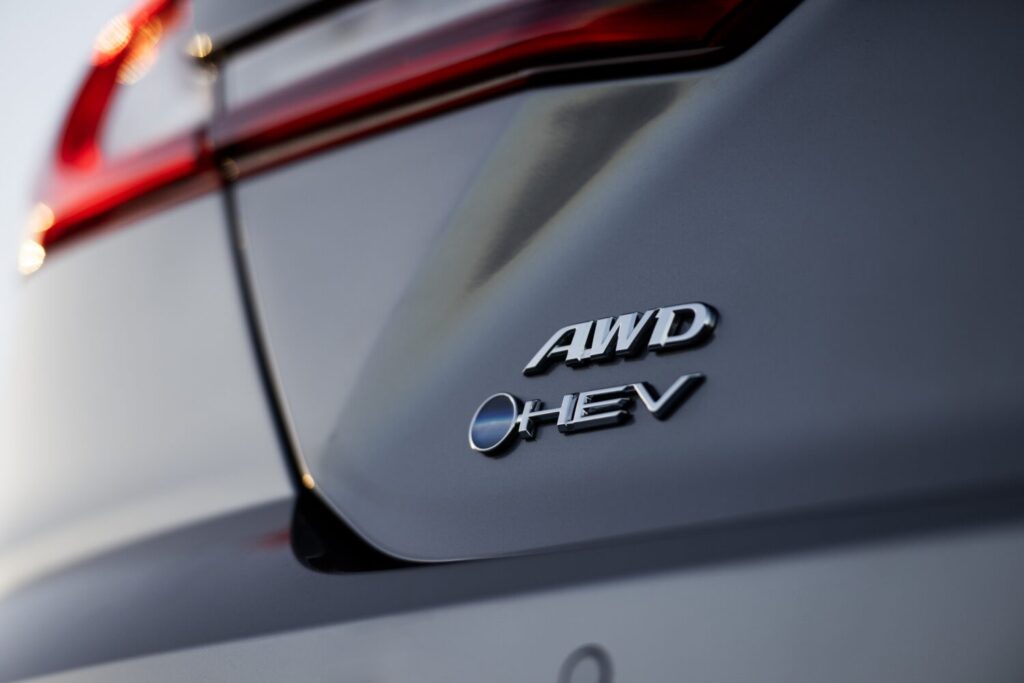
Every Camry pairs a 2.5-liter four-cylinder with Toyota’s fifth-generation hybrid system, rated at 225 net horsepower with front-wheel drive and 232 with all-wheel drive, according to Toyota’s 2027 Camry release. The all-wheel-drive system uses an electric motor on the rear axle and is offered on all five grades. Honda gives the Accord a choice: the LX and SE use a 1.5-liter turbo with 192 horsepower, and the Sport, EX-L, Sport-L and Touring use a two-motor hybrid with 204 horsepower, so the Camry has 21 more horsepower than the Accord Hybrid in front-drive form.
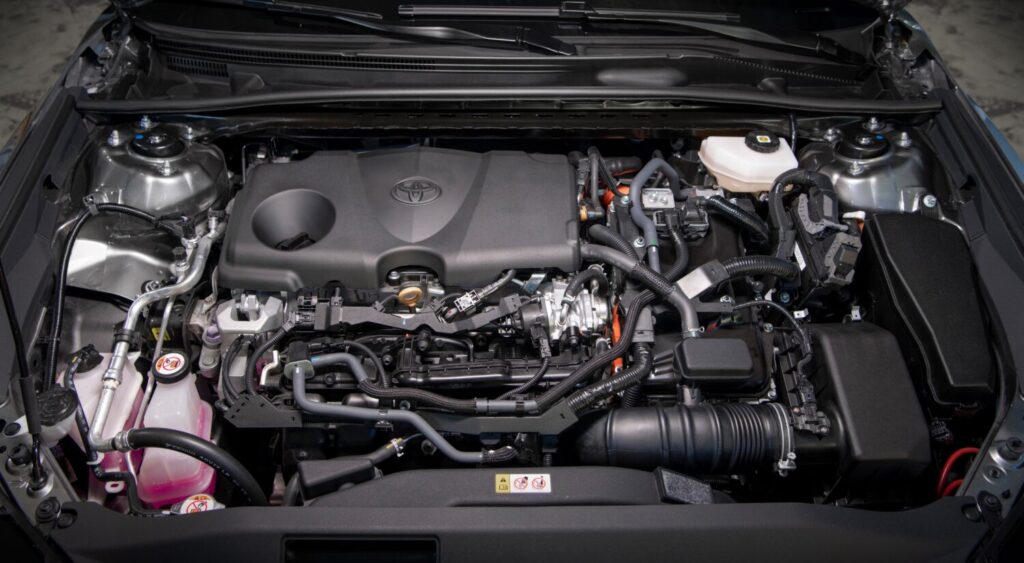
The EPA rates the front-drive Camry LE at 51 mpg combined and the SE, XLE and XSE at 46, against 48 mpg for the Accord EX-L Hybrid and 44 for the other Accord hybrids. That is a lead of 3 mpg at the most efficient end and 2 mpg further up the range, worth about $50 a year in the EPA’s fuel cost estimates. The bigger gap is between the Camry and the gas Accord, since the EPA puts the LX at 32 mpg combined and $1,900 a year in fuel, $700 more than the Camry LE.
Space, Cabin and Safety
The Accord is the larger car inside, even though it is only 2.2 inches longer than the Camry and rides on a wheelbase just 0.2 inch longer. Honda’s specifications give it 40.8 inches of rear legroom and a 16.7-cubic-foot trunk, against 38.0 inches and 15.1 cubic feet in Toyota’s Camry specifications, and the EPA classes the Accord LX and EX-L as large cars while it calls every Camry midsize.
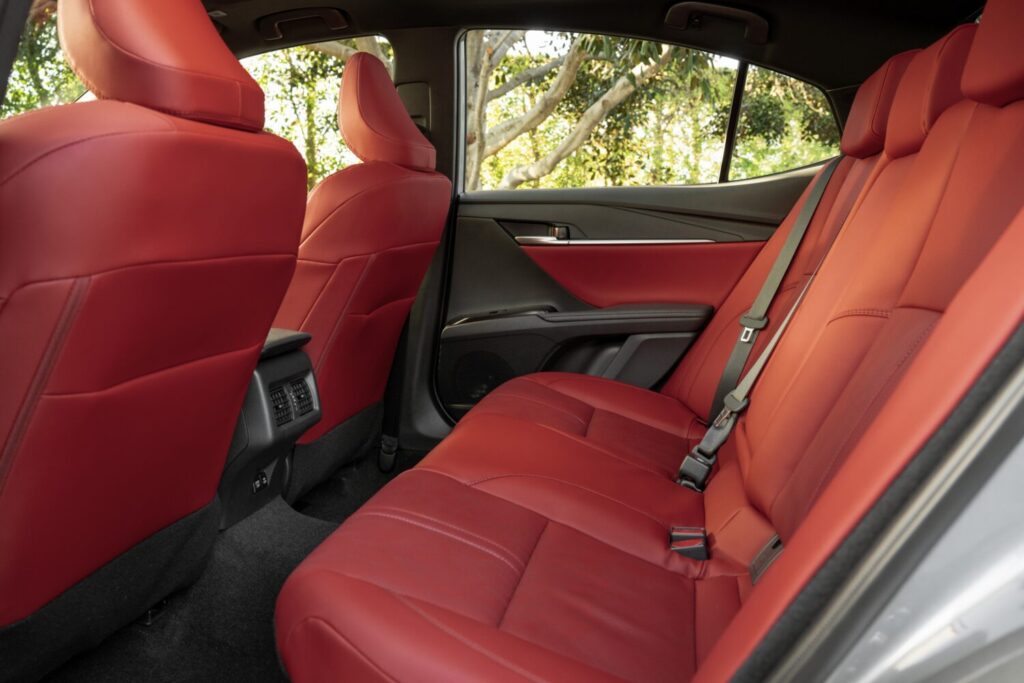
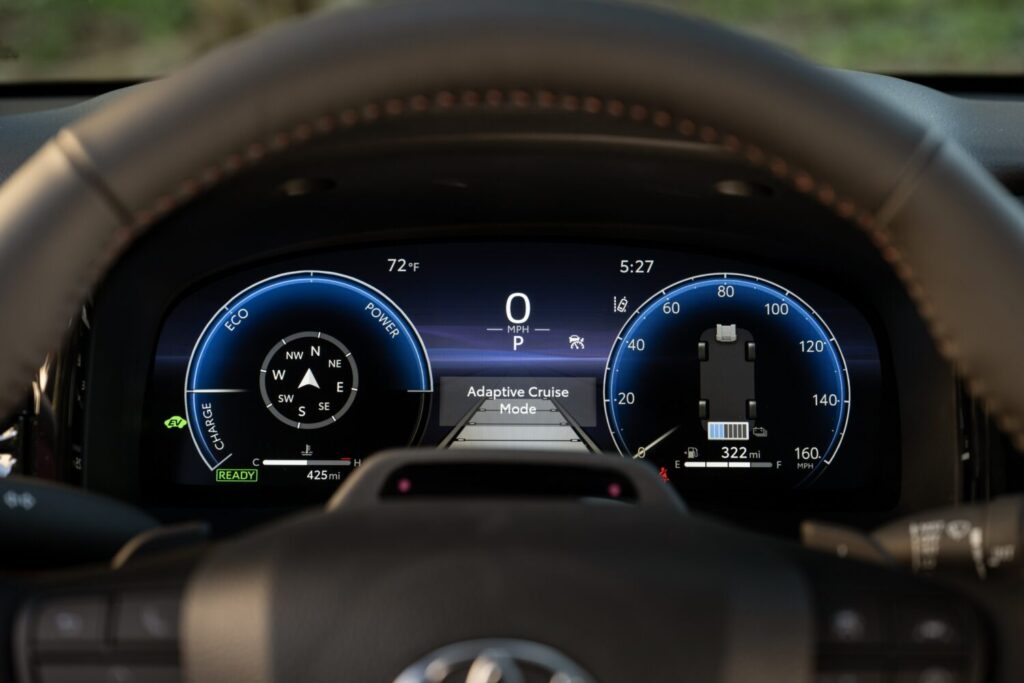
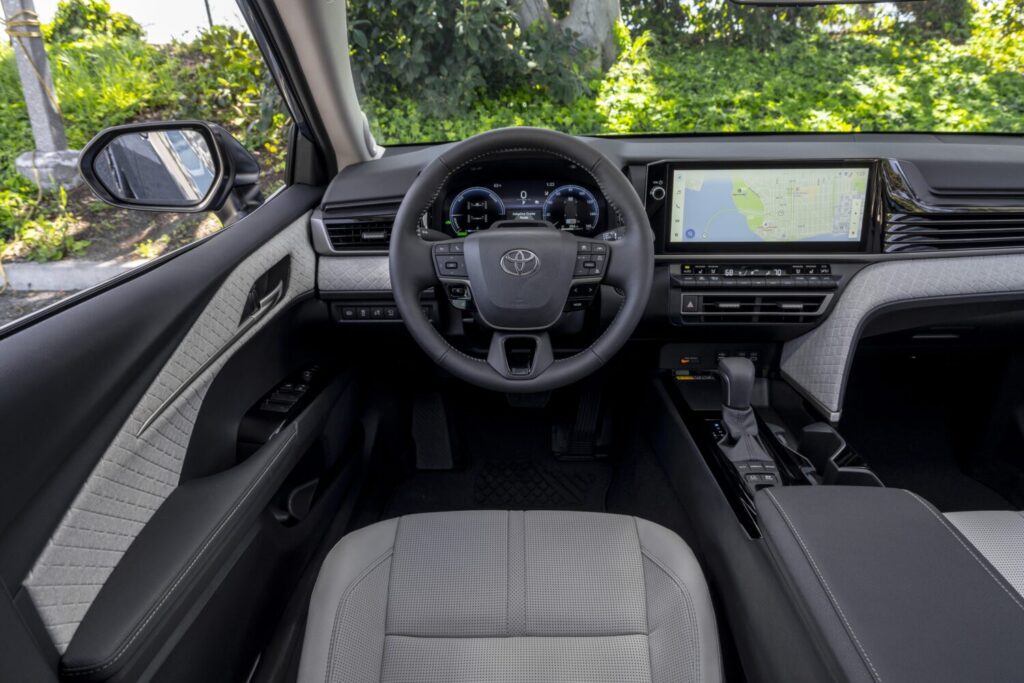
Up front, the Camry starts with an 8-inch touchscreen and offers a 12.3-inch screen on some grades, while the Accord has a 9-inch screen in the LX and SE and a 12.3-inch screen in every hybrid. Both brands make wireless Apple CarPlay and Android Auto standard.
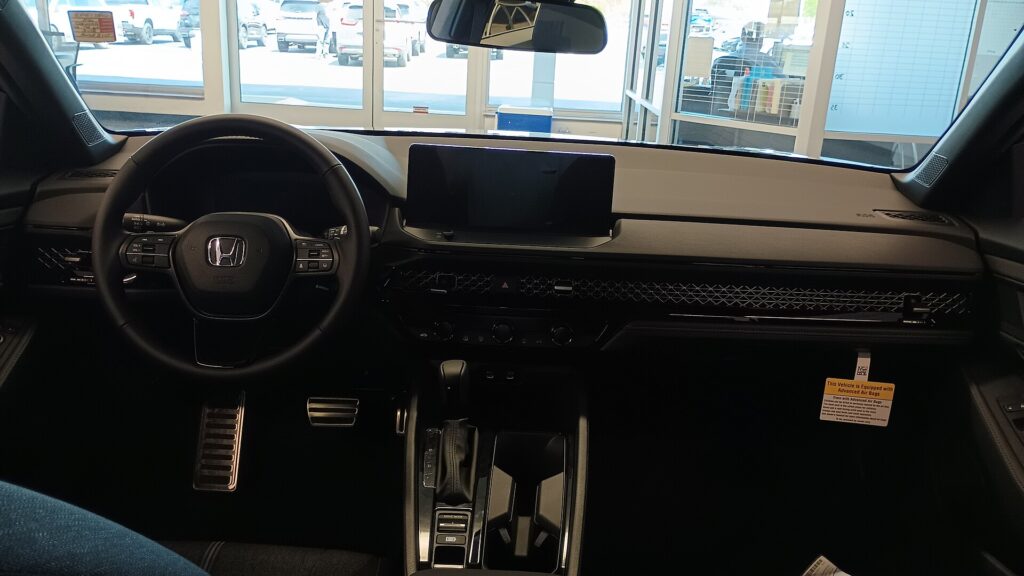
The Honda’s cabin trades the Camry’s two-tone trim for a dark dashboard that runs a honeycomb mesh across its full width.
Both sedans earn five stars overall from the National Highway Traffic Safety Administration. The Insurance Institute for Highway Safety names the 2027 Camry a Top Safety Pick+ and the 2026 Accord a Top Safety Pick, and the institute rates the Accord’s pedestrian crash prevention Acceptable where the Camry’s is Good. Toyota also covers the Camry’s hybrid battery for 10 years or 150,000 miles and its other hybrid parts for 8 years or 100,000 miles, and adds a year of scheduled maintenance. Our earlier comparison of the Corolla and the Camry covers the step up from Toyota’s smaller sedan.
The Toyota Report Take
Buy the Camry if you want a hybrid without paying a premium for it, if you need all-wheel drive, or if the top safety award matters to you. It starts thousands below the cheapest Accord Hybrid, beats it on fuel economy at every comparable front-drive trim, and is the only one of the two that can send power to the rear wheels.
Buy the Accord if rear-seat room and trunk space come first, or if the lowest sticker price matters more than mileage. The extra 2.8 inches of rear legroom are easy to feel with adults in the back, and the gas LX is the cheapest way into either sedan. The Accord Hybrid is a fine car that simply costs more than the Camry for slightly less efficiency, so the gas Accord and the Camry are the two versions that make the strongest case for themselves.
Related
Corolla or Camry: The Priciest Corolla Sits Just $160 Below a Camry
The Toyota Corolla and the Toyota Camry overlap more than their sizes suggest, with the most expensive Corolla just $160 below the cheapest Camry.
A Camry Hybrid Buyer Waited Eight Months for a Fix, and Now He’s Suing
An Illinois buyer whose new 2026 Toyota Camry Hybrid was recalled within days of purchase has sued, claiming Toyota knew its hybrid inverter was faulty.

Toyota Camry Deals for November 2026: Leases From $279 a Month
Toyota is offering the 2026 Camry LE on a lease from $279 a month and financing from 3.49% for 36 months on the 2026 Camry this month.
Comments (0)
Join the discussion