GR Corolla / GR
Toyota’s Hydrogen GR Corolla Runs a Record 483 Laps at Fuji
Toyota's liquid-hydrogen GR Corolla completed a record 483 laps at the Fuji 24 Hours in early June, its sixth appearance at the race.
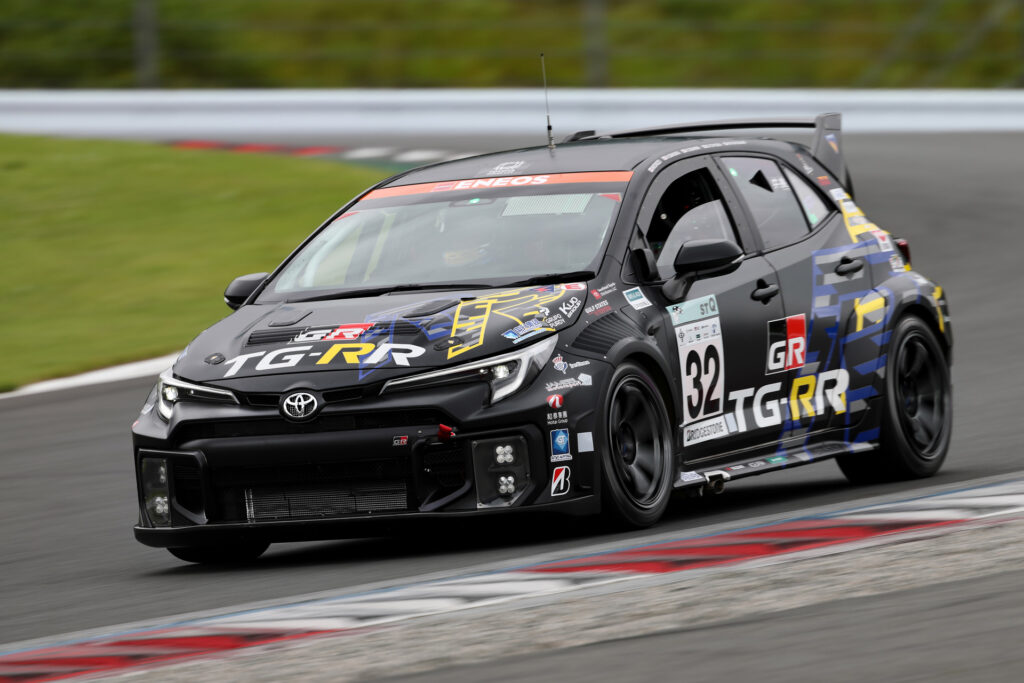
Toyota’s liquid-hydrogen GR Corolla completed a record 483 laps at the Fuji 24 Hours in early June, its sixth appearance at the race.
It also became the first race car to compete with a superconducting liquid-hydrogen pump on board. The #32 GR Corolla H2 Concept ran in the experimental ST-Q class at the third round of Japan’s Super Taikyu series at Fuji Speedway. Its 483 laps beat the 468 laps, about 2,135 km, that the car covered in 2025, when poor weather and speed restrictions held up the race for long stretches. The big change for 2026 was inside the fuel tank, where Toyota replaced the conventional electric motor that drives the liquid-hydrogen pump with a superconducting one.
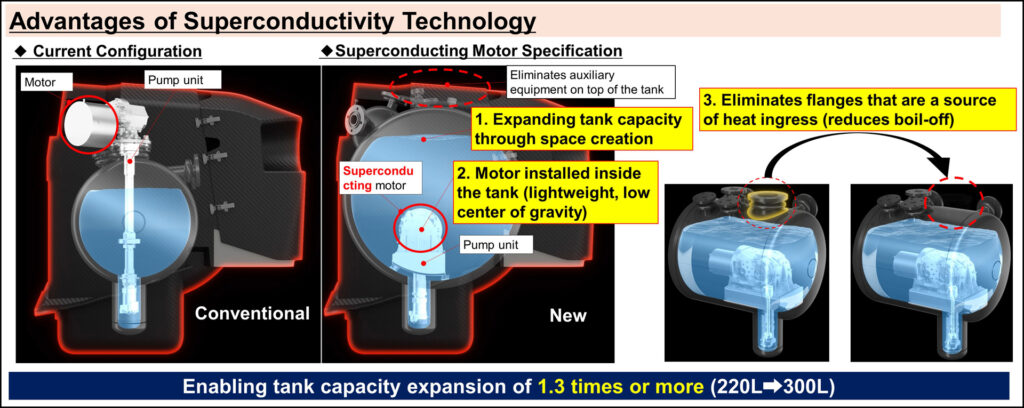
Toyota’s pre-race release explained why that matters. Liquid hydrogen is stored at -253°C, cold enough for superconductivity to work, so the motor could move from the top of the tank to the inside of it. That freed enough room to grow the tank from 220 liters at the 2025 season finale to as much as 300 liters, and putting the heavy motor lower in the car was also expected to lower its center of gravity. The car also paired Toyota’s Direct Automatic Transmission with a hydrogen engine for the first time.
Naoaki Ito, the project general manager for the hydrogen engine program, told Toyota Times that range per tank has been the team’s main target. "The gasoline GR Yaris can run about 40 laps on a full tank, but until now with the liquid hydrogen Corolla, our packaging limited us to 30 laps at most," he said. The bigger tank now carries enough liquid hydrogen for 40 laps, though Ito cautioned that "this doesn’t directly translate into running 40 laps like a gasoline-fueled car." He named durability and boil-off, the hydrogen that evaporates while it sits in the tank, as the biggest remaining problems, and said that early in development the motor would not turn at all.
The run still fell short of what the team had hoped for. Korean outlet Asia Economy reported that Toyoda had set a target of 500 laps before the race, and that a voltage regulator problem lengthened the car’s time in the pits and kept it from getting there. The same report put the car’s total at 484 laps, one more than Toyota’s own figure, and said that Toyoda, racing as "Morizo" for his ROOKIE Racing team, drove 75 laps himself at age 70. The overall win went to the TKRI team’s Mercedes-AMG GT3, which completed 793 laps.
The superconducting motor was developed with outside help. Kyoto University professor Taketsune Nakamura told Toyota Times News that racing vibration makes the idea hard to imagine, saying, "Using a superconducting motor in a race car is almost unthinkable." Toyoda framed the season as a beginning rather than a finish line. "Our journey toward the future, now in its 6th year, is just beginning," he said.
The Toyota Report Take
Fifteen more laps than last year doesn’t sound like much, but the hydrogen Corolla’s progress was never going to show up as a big jump in distance while the team is still swapping in brand-new hardware like a superconducting pump. The more telling number is the 40-lap tank, because it finally puts the car within reach of a gasoline GR Yaris on fuel stops, and fuel stops are what have kept it far behind the field. If Toyota can solve the electrical gremlin that cost it the 500-lap goal and keep boil-off under control, next year’s Fuji 24 Hours is where the car should show what this year’s work was worth.
Related
Toyota’s Most Expensive Corolla Has No Back Seat
The 2026 GRMN Corolla, the most extreme version of Toyota's hot hatchback, starts at $64,360 before destination, and only 730 will be built worldwide, every one of them…
A Headlight Fix Wasn’t Enough to Win the bZ an IIHS Award
Toyota fixed the 2026 bZ's headlights for SUVs built from June 2026 onward, but two middling crash-test scores still keep its electric SUV off the IIHS award list.

The Last Gas Highlander Costs More Than the Bigger Grand Highlander
The 2026 Toyota Highlander starts at $45,270, which is more than the larger Grand Highlander costs to start.
Comments (0)
Join the discussion